Author: hugoadmin

  • Where to Live in Bicester When You Work Shifts in Oxford

    Where to Live in Bicester When You Work Shifts in Oxford

    You work shifts in Oxford, but Bicester is where your budget stretches further. The commute is the part that decides everything, and it rarely behaves like a nine-to-five. A 7am start at the John Radcliffe and a 9pm finish at the Churchill are different journeys entirely. This guide covers the neighbourhoods, the transport trade-offs and the checks that make shift work in Oxford genuinely liveable from a Bicester base.

    Quick answer: where to live in Bicester for an Oxford shift pattern

    • Best for rail commuters: Bicester Village and the town centre, within walking distance of Bicester Village station.
    • Best for drivers: Bicester North side and villages along the A4421, with easier parking and quick access to the A34.
    • Best for quiet: Chesterton, Launton and Stratton Audley, if you want village feel and do not mind a short drive to the station.
    • Best value: Southwold and Glory Farm, where rents are typically lower than the centre and buses run along the main roads.
    • Quick logistics: Bicester has two stations. Bicester North serves London Marylebone via the Chiltern line; Bicester Village serves Oxford and Oxford Parkway. Check which one your route needs before you sign a tenancy.

    Why Bicester works for Oxford shift workers

    Bicester sits roughly 15 miles north-east of Oxford, and the rail link between Bicester Village and Oxford is short enough that a commute is realistic rather than heroic. For shift workers, the appeal is not just distance. It is that Bicester gives you more space, easier parking and lower rents than most Oxford postcodes, while keeping Oxford reachable by train, bus or car.

    Couple relaxing on an armchair by the window with coffee during daytime rest between shifts

    The catch is timing. Shift patterns rarely match a nine-to-five timetable, so the question is not “is Bicester close to Oxford” but “can I get to and from my workplace at the hours I actually work”. Answer that first, then choose the neighbourhood.

    How to choose: the four criteria that matter

    Work backwards from your rota. The right area for a 7am hospital start is often the wrong one for a midnight finish.

    1. Your shift times

    Early shifts reward proximity to a station or a fast road out of town. Late finishes reward somewhere with parking, lighting and a short walk from the car or bus stop to your front door.

    2. Your transport mode

    Rail is fastest when it runs; the car is more flexible when it does not. If you rely on trains, live within walking distance of Bicester Village station. If you drive, prioritise parking and access to the A34 or A41.

    3. Budget

    Rents in Bicester are generally lower than equivalent Oxford postcodes, but the gap narrows near the stations. Factor in travel costs and parking before comparing two properties.

    4. Vibe and downtime

    Shift work is tiring. A quiet street with a decent shop nearby often beats a livelier location that costs you sleep. Bicester town centre has the shops, cafes and gyms; the edge-of-town estates are calmer.

    Residents cooking a warm dinner together in a home kitchen after a demanding work shift

    Bicester neighbourhoods, area by area

    Each area below suits a different version of the same commute, so match it to your rota rather than to a generic “best area” list.

    Bicester Village and town centre

    Best if you want to walk to the train and skip parking entirely. Bicester Village station puts Oxford services within a short stroll, and the town centre gives you shops, takeaways and gyms on your doorstep. Rents here are the highest in town, typically reflecting the convenience.

    Insider tip: The walk from the station to some town-centre streets crosses poorly lit areas after dark. Test your specific route at night before committing.

    Bicester North

    Best for drivers and London-leaning commuters. Bicester North station serves the Chiltern line towards Marylebone, and the surrounding streets are convenient for the A4421 and the ring road. If your Oxford shifts are occasional and your London trips are regular, this may suit you better than Bicester Village.

    Insider tip: Parking at Bicester North station fills up quickly on weekday mornings. If you plan to drive and park, check the car park’s current capacity and charges.

    Southwold and Glory Farm

    Best for value and family-sized space. These estates sit south and south-west of the centre, with bus routes along the main roads and easy access to the A41 towards Oxford. Evening bus frequency drops, so if you finish late, check the last service before you commit to a car-free life here.

    Insider tip: The walk from the main bus stops into some parts of Southwold can be longer than it looks on a map. Trace your route door-to-door.

    Chesterton, Launton and Stratton Audley

    Best if you want village quiet within a short drive of town. These villages sit on the eastern and northern edges of Bicester, close to the A4421 and the M40. Village life often means a car for everything, including the trip to the station, so budget for parking at Bicester Village or Oxford Parkway if you plan to drive-and-ride.

    Insider tip: Some village lanes are prone to standing water after heavy rain. If you commute by car in winter, have a backup route in mind.

    Relaxing in a peaceful green garden setting during downtime between Oxford hospital and work shifts

    Kingsmere and the south-west growth areas

    Best for newer housing and modern layouts. These developments sit on the south-western side of Bicester, with good road links towards the A34 and Oxford. New-build estates can look close to the station on a map but be a 30-minute walk in practice.

    Insider tip: Time the walk from your specific street to the station yourself. Estate agents’ estimates can be optimistic.

    Getting from Bicester to Oxford: your options

    There is no single best route; there is only the one that fits your shift.

    • Train: Bicester Village station connects to Oxford and Oxford Parkway. Fast and predictable when services run, but early and late coverage is limited, so check the first and last trains for your shift times.
    • Car: The A34 and A41 are the main routes. Journey times vary sharply with traffic, so allow a buffer for peak hours and for match days or events in Oxford.
    • Bus: Stagecoach and other operators run services between Bicester and Oxford. Cheaper than the train, slower, and with a reduced evening timetable.
    • Park and ride: Oxford Parkway and the Oxford park-and-ride sites can cut city-centre driving and parking costs if you work near a bus corridor.

    Common mistake to avoid: assuming the train will cover your late finish. Many shift workers discover too late that the last service leaves before their shift ends. Always check the current timetable for your specific hours before choosing an area based on rail access.

    At a glance: a shift-worker’s Bicester checklist

    • Write down your actual start and finish times for a typical week, including weekends.
    • Check the first and last trains from Bicester Village to Oxford for those times.
    • Check the last bus on your route home.
    • Drive or walk your commute once at the hour you would really be travelling.
    • Confirm parking availability and cost at home and at work.
    • Test the walk from station or bus stop to your front door after dark.
    • Compare total monthly cost: rent plus travel plus parking, not rent alone.

    Local logistics: practical notes before you commit

    Small details decide whether a Bicester base works long term.

    • Booking and tenancy: Rental demand near both stations is steady, so view early and be ready to move quickly. Ask about parking permits and any estate management charges before you sign.
    • Best times to travel: Aim to be on the road or platform before the main peak if your shift allows. Mid-morning and early afternoon are the easiest windows on the A34.
    • Accessibility: If you need step-free access or assisted travel, check the facilities at your specific station and arrange support in advance with the operator. Station layouts differ between Bicester North and Bicester Village.
    • Seasonal factors: Winter dark and occasional flooding on rural routes can affect village commutes. If you live outside town, have a backup route in mind.

    Common mistake to avoid: choosing a home on rent alone and ignoring the travel line. A cheaper village property with two buses and a taxi a week can cost more than a pricier flat within walking distance of the station.

    FAQs about living in Bicester and working in Oxford

    Is Bicester a good place to live if I work shifts in Oxford?

    Yes, provided your shift times line up with the train, bus or road network. Bicester offers more space and lower costs than most Oxford postcodes, but late finishes and early starts need checking against the timetable before you choose an area.

    Which Bicester station goes to Oxford?

    Bicester Village station serves Oxford and Oxford Parkway. Bicester North primarily serves the Chiltern line towards London Marylebone. Check the current timetable, as service patterns can change.

    How long is the commute from Bicester to Oxford?

    The train journey is short, typically well under half an hour, while driving depends heavily on traffic on the A34 and A41. Allow extra time at peak hours and during Oxford events.

    Do I need a car to live in Bicester?

    Not necessarily. The town centre and areas near the stations are walkable and have bus links. If you live in a surrounding village or work unsocial hours, a car makes life considerably easier.

    What should I check before renting near the station?

    Confirm parking arrangements, permit costs, the night-time walk to your door and the first and last train times for your shift pattern. These four checks prevent most commuting regrets.

    Living well in Bicester is less about the postcode and more about the rhythm of your week. When your home, your commute and your downtime fit together, shift work stops feeling like a grind and starts feeling like a routine you can actually keep. That is the balance worth aiming for.

    If you are relocating for work in Oxford and want a straightforward, well-connected base in Bicester, B-Hive Living is worth a look. We rent to young professionals and remote workers who value good design, easy transport links and a genuine sense of community. Take a look at what is available and see whether a Bicester address fits your next move.

  • Where to Live When You Work Near Oxford Airport or Kidlington

    Where to Live When You Work Near Oxford Airport or Kidlington

    If your working week revolves around Oxford Airport, the Oxford Technology Park or the Langford Lane business cluster, the commute question comes before almost everything else. Kidlington itself is the obvious base, but it is not the only one that works. Yarnton, Begbroke, Woodstock, Bicester and north Oxford all sit within a realistic commute, and each one trades something different: space, character, train links or a shorter drive. This guide covers indicative rents, the named buses and trains that actually serve the area, and the details that separate a postcode that works from one you regret by week three.

    Quick answer: where to live near Oxford Airport and Kidlington

    • Best all-rounder: Kidlington, for walking distance to the airport and a full town centre.
    • Best village compromise: Yarnton or Begbroke, both roughly 10 to 15 minutes by car from the airport.
    • Best for character: Woodstock, around 15 to 20 minutes via the A44.
    • Best value with train links: Bicester, with two stations and fast services to Oxford and London Marylebone.
    • Best for city amenities: Summertown and Wolvercote in north Oxford, at a higher rent.

    Understand the area before you pick a postcode

    The Kidlington cluster sits just north of Oxford, hemmed in by the A34, the A44 and the A4260. Oxford Airport and the Oxford Technology Park sit on the edge of Kidlington, so a good number of people working there walk or cycle in. The trade-off is thin public transport away from the main bus corridors, and the A34 can turn a three-mile trip into a 25-minute crawl at peak times.

    Decide first whether you want to drive, take the bus or rely on trains. That single choice narrows your shortlist faster than any spreadsheet of rents. If you are weighing up the wider city too, our guide to living in Oxford covers the neighbourhoods we get asked about most.

    Kidlington: the practical base

    Kidlington is the default answer for airport workers because you can genuinely walk or cycle to work, and everything you need day to day sits within the town. It is one of the largest villages in England, with a small-town feel rather than a city one.

    What you get

    • A Sainsbury’s and a Tesco Express in the centre, plus a library and a leisure centre with a pool.
    • Oxford Bus Company and Stagecoach services along Banbury Road and the A4260 into Oxford, typically every 10 to 15 minutes through the day. Check current timetables before you rely on a specific service.
    • Housing from 1930s semis around the Benmead Road and Lyne Road area to newer flats near the Oxford Road developments.

    Indicative rents

    One-bedroom flats generally sit in the £1,000 to £1,250 a month range, two-bedroom houses around £1,300 to £1,550, and three-bedroom family homes from roughly £1,600 upwards. Treat these as starting points for your search rather than quoted prices, and always check current listings.

    Insider tip

    Look at streets just off the main Banbury Road rather than on it. You keep the same convenience with far less traffic noise, and overnight parking is noticeably easier.

    Yarnton and Begbroke: village calm, short drive

    These two villages west of Kidlington give you a quieter, greener setting while keeping you within roughly 10 to 15 minutes of the airport by car. Yarnton has a station on the Cotswold Line towards Oxford and Worcester, but the service is infrequent, so treat it as a bonus rather than a commuting plan.

    What you get

    • Yarnton has a primary school, a village hall and a couple of pubs within walking distance of most homes.
    • Begbroke is tiny and green, with quick access to the A44 for Woodstock and the Cotswolds.
    • Rents tend to run a little below Kidlington for similar space, with two-bedroom cottages often around £1,200 to £1,450 a month.

    Insider tip

    Ask for a broadband speed test before you commit. Several older cottages in both villages have thick stone walls, and a slow connection will wear thin fast if you work from home two or three days a week.

    Woodstock: character with a longer view

    Woodstock is a handsome stone-built market town with independent shops, a strong food scene and Blenheim Palace on the doorstep. It is around 15 to 20 minutes to Kidlington by car via the A44, and buses run through to Oxford via Kidlington.

    What you get

    • A genuinely good pub and restaurant scene for a town of its size.
    • Weekend walks and culture without a trip into Oxford.
    • Rents above Kidlington levels: expect roughly £1,150 to £1,400 for a one-bedroom flat and £1,500 plus for a two-bedroom cottage.

    Insider tip

    Parking in the centre is tight and some streets are permit-controlled. If you view a flat without a designated space, ask neighbours where residents actually park overnight before you fall for the postcode.

    Bicester: value, trains and space

    Bicester has grown quickly and now offers a wide choice of new-build flats and houses, usually with more space per pound than Oxford. Two stations, Bicester North and Bicester Village, connect to Oxford, London Marylebone and Birmingham, which is a real draw if your job involves travel.

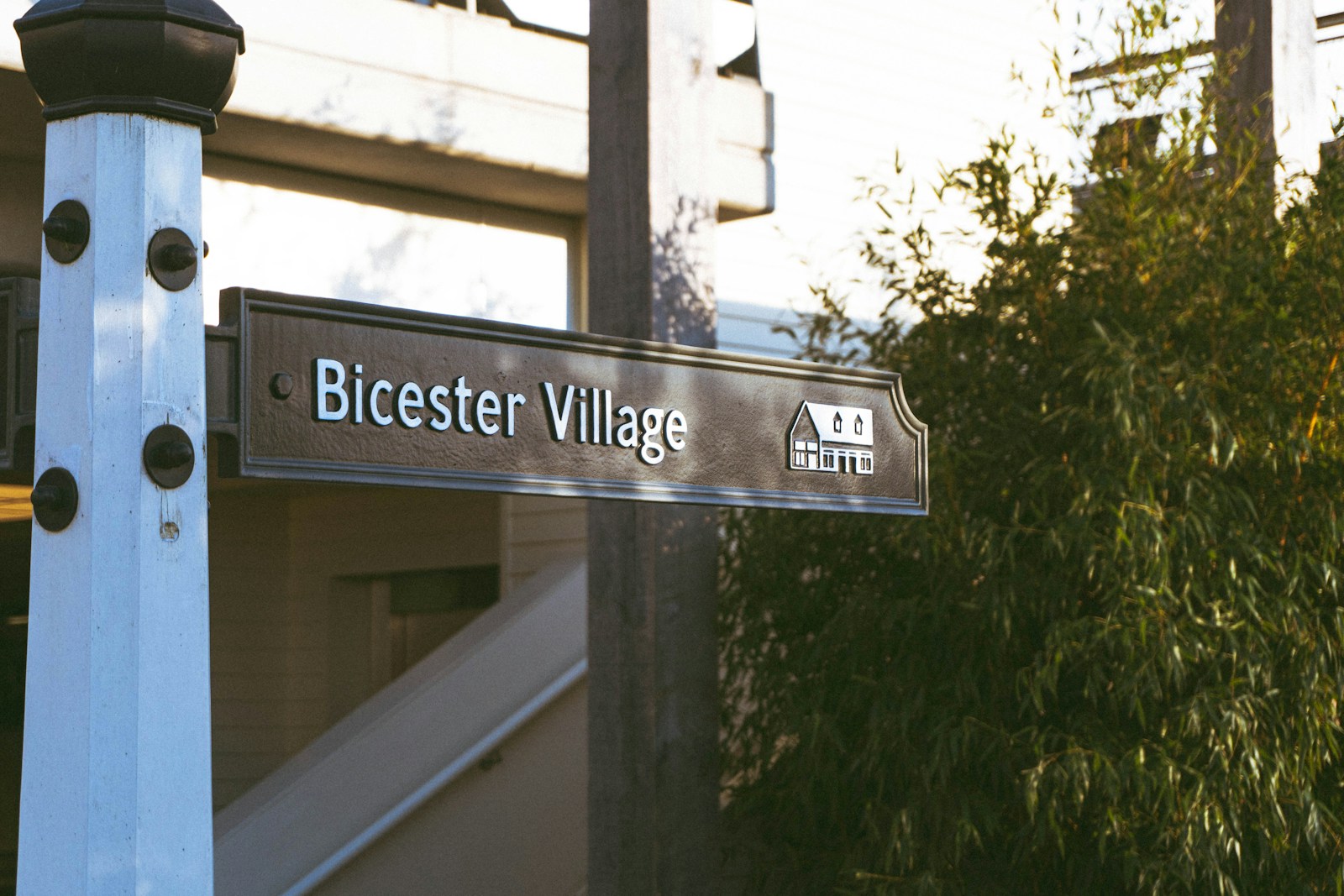
    Bicester Village entrance sign, retail and residential hub near Kidlington

    What you get

    • Chiltern Railways services from Bicester North to London Marylebone, and connections towards Oxford from Bicester Village. Check current timetables and journey times before you plan around them.
    • Bicester Village and the town centre cover shopping and dining.
    • Newer developments often include gyms, co-working space and allocated parking.
    • Two-bedroom new-build flats commonly list around £1,100 to £1,350 a month, with three-bedroom houses from roughly £1,400.

    Insider tip

    If you plan to drive to Kidlington, test the A34 at 8am on a weekday before you sign anything. The distance looks short on a map, but the northbound queue can add 20 minutes without warning.

    North Oxford: city life with a commute

    Summertown, Wolvercote and Cutteslowe put you on the edge of Oxford with frequent buses heading north. You get city amenities, good schools and a lively high street in Summertown, and you pay accordingly.

    What you get

    • Frequent buses along Banbury Road towards Kidlington and Oxford city centre.
    • Independent shops, cafes and a farmers’ market in Summertown.
    • Cycle paths along Banbury Road that make bike commuting realistic for much of the year.
    • Rents are the highest on this list, with one-bedroom flats often £1,300 to £1,600 and two-bedroom flats from around £1,600.

    Insider tip

    Wolvercote feels almost rural but sits inside the ring road, so you get green space and canal walks without leaving Oxford. It is the pick if you want both and can stretch the budget.

    How to choose: budget, vibe, timing and transport

    Four filters will get you from a long list to two or three viewings.

    • Budget: Bicester and Yarnton give the most space per pound. Summertown and Woodstock cost more for less.
    • Vibe: Kidlington is practical, Woodstock has character, Bicester is new-build convenient, north Oxford is city energy.
    • Timing: If you start early, living west in Yarnton or Begbroke helps you avoid the worst A34 southbound queues.
    • Transport: To drop the car, prioritise Kidlington or north Oxford for buses, or Bicester for trains.

    The real cost of the commute

    Rent is only part of the picture. A cheaper postcode with a daily drive can cost more than a pricier one within walking distance. Here is how the numbers stack up for a five-day office week.

    • Kidlington, walking or cycling: effectively £0 in travel, roughly 15 to 20 minutes door to door on foot or bike.
    • Yarnton or Begbroke, driving: fuel of around £30 to £45 a month for the short hop, plus wear on the car and any parking charge at work.
    • Woodstock, driving: fuel nearer £50 to £70 a month and a longer A44 run in winter.
    • Bicester, driving: fuel of roughly £80 to £110 a month, plus the time cost of the A34 at peak.
    • Bicester, train plus bus: a season ticket and a connecting bus, but no parking and no queue.
    • North Oxford, bus: a monthly bus pass and a 25 to 35 minute journey depending on the service.

    Add the value of your own time. Two hours a week saved is roughly 100 hours a year, which for most people is worth more than the rent difference between two neighbouring villages.

    Local logistics: getting there, timing and booking

    Transport and timing matter more than most listings admit, so check them against your actual week before you commit.

    Getting around

    • Car: the A34, A44 and A4260 are the main routes. The A34 is the bottleneck at peak times.
    • Bus: Oxford Bus Company and Stagecoach run the main corridors between Kidlington, Summertown and Oxford. Frequencies drop in the evening and on Sundays, so check the last service home.
    • Train: Bicester North and Bicester Village are the practical stations for commuting. Yarnton’s service is limited, and Oxford Parkway is useful for London trips.
    • Cycle: Kidlington to Oxford Airport is cycleable, but lighting is patchy on some routes in winter.

    Best times to travel

    Start before 8am or after 9:30am and the A34 and A4260 feel like different roads. The same applies to buses, which are noticeably quieter outside the school run.

    Booking notes

    Rental stock near the airport moves quickly, and good two-bedroom places in Kidlington can go within days of listing. Have your references and deposit ready before you view. Ask specifically about parking permits, visitor parking, and any estate management charge on newer developments, because these are rarely in the headline rent.

    Accessibility

    Newer developments in Bicester and Kidlington are generally step-free, but older cottages in Yarnton and Woodstock may have narrow doorways, uneven pavements and no ground-floor bathroom. If you have specific access needs, view in person and walk the route from the nearest bus stop before deciding.

    Common mistakes to avoid

    • Assuming the A34 is always quick: it is not. Test your commute at the exact time you will travel, on a normal weekday.
    • Ignoring broadband: a slow connection in a pretty village will wear thin fast if you work remotely. Ask for a speed test at the property.
    • Overlooking parking: permit-only streets in Oxford and Woodstock add cost and hassle. Factor both in.
    • Choosing purely on rent: add travel, parking and time. A cheaper Bicester flat can cost more once you commute daily.
    • Signing before you visit at night: street lighting, noise and parking all look different after dark, and that is when you will actually live there.

    FAQs

    Where should I live if I work near Oxford Airport or Kidlington?

    Kidlington is the most practical base for most people, with Yarnton and Begbroke close behind for a quieter village feel. Bicester suits anyone who wants more space and train links, and north Oxford suits those who want city amenities and will trade commute time for them.

    Is Kidlington a good place to live for young professionals?

    Yes, if you value a short commute and everyday amenities over nightlife. Oxford is a short bus ride away for evenings out, and the leisure centre and riverside walks cover most weeknights.

    Young professionals working remotely near Oxford and Kidlington

    How do I get from Bicester to Kidlington without a car?

    There is no direct rail link. The realistic route is a train to Oxford or Oxford Parkway and then a bus north, which is not a quick door-to-door trip. Check current timetables before you rely on it.

    What is the best time to commute to Oxford Airport?

    Before 8am or after 9:30am, if your role allows flexible hours. Peak times on the A34 and A4260 add significant delay, and the difference is most obvious on a Tuesday or Wednesday.

    Do I need a car to live in Yarnton or Begbroke?

    It helps. Buses are limited, the nearest shops are a walk or short drive away, and Yarnton’s train service is too infrequent to depend on. If you plan to cycle, check the route and lighting first.

    At a glance: your shortlist checklist

    • Decide your transport mode before you shortlist areas.
    • Test the commute at the time you will actually travel.
    • Ask for an indicative rent range and check current listings.
    • Confirm parking, permits and estate charges in writing.
    • Request a broadband speed test if you work from home.
    • Visit at night before you sign.

    Sponsor note: B-Hive Living provides shared and private rental homes in Oxford and Bicester for young professionals and remote workers. The areas above are covered independently, based on their merits as places to live.

    HMO Awards 2022 - UK's Best Community Experience award badge

    Living well near Oxford Airport comes down to matching your home to your actual week, not just your budget. A short commute buys back hours for the things that make a place feel like home: a regular gym class, a favourite pub, a weekend walk along the canal. If you are ready to find a home that fits that rhythm, take a look at what B-Hive Living has available in Oxford and Bicester. We would be glad to show you around.

  • Oxford vs. Bicester Corporate Accommodation: A Cost and Commute Comparison

    Oxford vs. Bicester Corporate Accommodation: A Cost and Commute Comparison

    You have a contract in Oxfordshire, a start date in a few weeks, and a spreadsheet open on two tabs: Oxford and Bicester. One is the postcode everyone recognises, the other keeps coming up as the sensible option. This guide compares corporate accommodation in Oxford and Bicester on the three things that shape a working week: what you pay, how you travel, and what your evenings look like. By the end you will know which town fits your contract, not just your CV.

    Quick answer: which town suits which worker

    • Choose Oxford if your role is city-centre based, you walk or cycle to work, and you want the historic core on your doorstep.
    • Choose Bicester if you want more space per pound, easy M40 access, and a short rail link into Oxford.
    • Best for hybrid workers: Bicester, where a proper home office and a fast train into Oxford can coexist.
    • Best for short placements: Oxford, where most commitments sit within walking distance.
    • Check before you commit: current train times, parking arrangements, and whether your employer offers travel support.

    Cost: what your money actually buys in corporate accommodation in Oxford and Bicester

    Oxford commands a premium because demand from students, academics, and professionals outstrips supply, especially in the centre and around Jericho, Summertown, and Headington. Bicester tends to offer more floor space and newer builds for a comparable outlay, which matters when you need a real desk rather than a corner of the living room.

    Spacious high-spec corporate accommodation living area in Bicester offering superior value and comfort

    Rather than chase figures that shift with the market, treat cost as a ratio: monthly rent against usable rooms, commute spend, and the time you gain or lose each day. A cheaper base that adds an hour of daily travel is rarely the bargain it first appears to be.

    Oxford: where the premium goes

    You are paying for proximity. Living centrally means short walks to offices, libraries, cafes, and the rail station. Insider tip: look just outside the ring road in Marston or Cowley, where you can often find more space and still cycle into the centre in under twenty minutes.

    Bicester: where the value sits

    Bicester’s appeal is space and connectivity. Newer developments tend to include dedicated work areas, and the town’s position near the M40 suits anyone splitting time between Oxford, London, and the Midlands. Insider tip: confirm whether your development includes allocated parking, because on-street parking on newer estates is often tightly managed.

    Commute: time, cost, and reliability

    The commute usually decides the Oxford versus Bicester question. Oxford rewards walkers and cyclists; Bicester rewards those comfortable with a short train or drive. If you must be on site five days a week, the daily rhythm of each option will shape your energy far more than the rent does.

    Train

    Bicester has stations serving the Oxford direction, with journey times that make daily commuting feasible for many workers. Timetables and season ticket prices change, so check the current schedule before you sign a lease. Common mistake: assuming a peak service runs as frequently as it does off-peak. Time your trial journey at the hour you would actually travel.

    Car

    Driving from Bicester into Oxford means contending with the city’s traffic restrictions and limited central parking. If you drive, factor in park-and-ride costs and confirm your accommodation includes a space. Insider tip: Oxford’s park-and-ride sites fill early on weekdays, so aim to arrive well before the morning peak.

    Walking and cycling

    In Oxford, a bike often beats a car for short central trips. Bicester is flatter and increasingly cycle-friendly, but distances between home and station are longer, so an e-bike or a reliable bus link helps.

    Lifestyle: what your evenings look like

    Oxford offers a dense social and cultural calendar, from pubs and theatres to riverside walks. Bicester is quieter day to day but has its own draw, including the designer outlet village and quick access to countryside. Which suits you depends on whether you want stimulation on your doorstep or a calmer base to return to.

    Premium corporate workspace and business lounge facilities for hybrid professionals in Oxfordshire

    A shortlist to test in Oxford

    • Jericho: a village feel within walking distance of the centre, good for pub evenings and independent shops. Insider tip: it is popular with professionals, so short-term availability moves fast.
    • Cowley Road: a lively, diverse stretch with affordable food and a strong cycling route into town.
    • Summertown: quieter and leafier, with good everyday shops, best if you want calm but still central.

    A shortlist to test in Bicester

    • Town centre: closest to both stations and the outlet village, ideal if you want to walk to the train.
    • Kingsmere and newer edge developments: more space and parking, popular with remote workers who need a study.
    • Bicester Village area: convenient for shopping and rail, though busier at weekends. Insider tip: check noise levels on a Saturday before committing.

    How to choose: a simple framework

    1. Map your week: count how many days you must be on site versus working remotely.
    2. Price the commute: add season tickets, fuel, and parking to the rent before comparing.
    3. Test the vibe: spend an evening in each town before deciding.
    4. Check the lease terms: confirm notice periods and whether bills are included.
    5. Verify logistics: parking, broadband speed, and proximity to shops or a gym.

    At a glance: a two-day comparison trip

    • Day one: base yourself in Oxford, walk the centre, and time a cycle from a residential neighbourhood to your likely workplace.
    • Day two: stay in Bicester, take the train into Oxford at peak time, and experience the commute for yourself.
    • Evening: eat locally in each town to gauge the atmosphere after working hours.
    • Before you book: note the walk from each base to the station, the nearest supermarket, and where you would work out.

    Local logistics to sort early

    Book viewings ahead, especially for short-term corporate lets, as good properties move quickly. Confirm what the rent includes, from utilities to cleaning, and ask about minimum stay lengths. For accessibility, check step-free access at stations and whether your building has a lift, since older Oxford properties in particular can be restrictive. Common mistake: leaving the parking question until after you sign. In both towns, a space can be the difference between a smooth week and a daily scramble.

    Frequently asked questions

    Is Bicester cheaper than Oxford for corporate accommodation?

    Generally yes, particularly for larger or newer properties, though you should weigh any added travel costs against the saving.

    How long is the commute from Bicester to Oxford?

    By train it is typically a short journey, but times vary by service, so check the current timetable before relying on it daily.

    Do I need a car if I live in Bicester?

    Not necessarily, but a car or good bus links make everyday errands easier, especially outside the town centre.

    Which is better for remote workers?

    Bicester often wins on space for a dedicated office, while Oxford wins on cafes, co-working, and walkability.

    Executive corporate bedroom in Bicester with dedicated desk and high-speed Wi-Fi for hybrid workers

    Can I find short-term lets in both towns?

    Yes, both offer short-term options, but availability is tighter in Oxford, so start your search early.

    Where you live shapes how you work, rest, and connect with the people around you. Oxford and Bicester each offer a genuinely different version of Oxfordshire living, and the right choice is the one that matches your working week rather than someone else’s. B-Hive Living builds communities for professionals and remote workers across the region, so you can settle in quickly and feel at home from the first week.

    If you are planning a move and want a base that balances comfort, location, and a welcoming community, we would love to hear from you. Get in touch to apply to live with B-Hive Living and find your next home in Oxfordshire.

  • Oxfordshire Employment Map: Where the Region’s Major Job Hubs Are

    Oxfordshire Employment Map: Where the Region’s Major Job Hubs Are

    If you are weighing up a move to Oxford or Bicester, or you already live here and the commute is starting to wear thin, the map matters more than the job title. Oxfordshire’s work is not spread evenly. It clusters into a handful of districts, and where you live relative to those clusters shapes your mornings, your rent, and your weekends. This guide walks you through the county’s major employment hubs, what each one is actually like to work in, and how to choose a base that keeps your commute sane.

    Quick answer: Oxfordshire’s main employment hubs at a glance

    • Oxford city – the largest concentration of employers, spanning universities, hospitals, research institutes, and city-centre professional services.
    • Science Vale (Didcot, Harwell, Milton Park) – the county’s research and technology corridor, south of Oxford.
    • Bicester – a growing logistics, engineering, and business-park cluster with strong rail links to both Oxford and London.
    • Banbury – the northern hub, with manufacturing, distribution, and a substantial motorsport and engineering presence.
    • Witney and West Oxfordshire – smaller but significant, with engineering, manufacturing, and a steady stream of remote-friendly employers.

    Best for: young professionals and remote workers who want a short commute without paying city-centre rents. Best time to explore: weekday mornings, when you can see the real traffic and train crowding for yourself.

    Oxford city: the biggest and most varied employment hub

    Oxford itself remains the county’s dominant employer base, and its jobs are unusually diverse for a city of its size. You will find university and college roles, NHS and biomedical positions, publishing, legal and financial services, and a dense layer of research spin-outs.

    Where the work concentrates

    • City centre and Jericho – university administration, publishing, and professional services, all within walking distance of each other.
    • Headington – the hospital campus and surrounding biomedical employers make this one of the most reliable job clusters in the county.
    • Osney Mead and Botley – a mix of science, engineering, and business services just west of the centre.
    • Oxford Business Park, Cowley – larger employers and support services, with good access from the eastern ring road.
    • Science Oxford and the city’s innovation spaces – smaller companies and start-ups, often hiring on flexible terms.

    Why it is worth considering

    Oxford gives you the widest choice of employers in one place, which matters if you change jobs without wanting to move house. The trade-off is cost and congestion. Insider tip: if you are targeting a Headington or Cowley employer, look at living in East Oxford or along the Cowley Road rather than the centre. You will often pay less and still walk or cycle to work.

    Science Vale: the research and technology corridor

    Science Vale is the umbrella name for the cluster around Didcot, Harwell, and Milton Park, and it is where much of the county’s science and technology employment sits. It is quieter than Oxford, more car-dependent, and often better paid for technical roles.

    Young professionals and tech researchers collaborating in a modern workspace near Oxfordshire science and innovation hubs

    The main sites

    • Harwell Campus – research institutes, space and energy organisations, and a growing number of specialist technology firms.
    • Milton Park – one of the largest business parks in the region, home to life sciences, tech, and engineering companies.
    • Didcot – a town with its own rail station, which makes it one of the few non-Oxford hubs with genuinely good public transport.

    Why it is worth considering

    If you work in science, engineering, or technology, this corridor probably has more relevant roles than central Oxford. Insider tip: Didcot Parkway is on the main line to London and Oxford, so living in Didcot itself can give you a car-free commute to work and a fast link to the city for evenings out. Check current timetables before you commit, as services vary by time of day.

    Bicester: logistics, engineering, and a fast-growing business community

    Bicester has moved well beyond its outlet-shopping reputation. The town now supports a substantial logistics and distribution sector, engineering employers, and a business park that has attracted a range of office-based companies.

    High-spec modern kitchen and island breakfast bar in Oxfordshire professional co-living home

    Where the work concentrates

    • Bicester business parks – office, engineering, and support services, often with on-site parking.
    • Logistics and distribution sites – shift-based roles that suit people who want predictable hours and a short drive.
    • Town centre – smaller employers, retail, hospitality, and professional services.

    Why it is worth considering

    Bicester is one of the best-connected towns in the county. Bicester North and Bicester Village stations give you rail access to Oxford and London, and the M40 sits right there for drivers. Insider tip: if you are hybrid, check the specific station for your destination. Bicester North and Bicester Village serve different lines, and mixing them up is a common source of missed trains.

    Banbury and the north: manufacturing and motorsport

    Banbury anchors the north of the county, with a strong manufacturing and engineering base and a notable motorsport cluster nearby. It is a practical choice if your sector is industrial or technical and you want lower housing costs than Oxford.

    What is there

    • Manufacturing and distribution – large sites with shift patterns and good road access.
    • Motorsport and engineering – specialist employers that draw on the wider Silverstone corridor.
    • Town-centre services – professional services, healthcare, and education roles.

    Why it is worth considering

    Banbury offers a different pace and price point from Oxford, with a direct rail link south. Insider tip: if you are considering Banbury but your job is in Oxford, trial the train at peak time before you sign a lease. The journey is manageable, but peak services are busy and you will want to know how it feels day to day.

    Witney and West Oxfordshire: smaller hubs worth knowing

    West Oxfordshire does not have a single dominant employer cluster, but Witney and the surrounding towns host a steady mix of engineering, manufacturing, and professional services. It is also a popular base for remote workers who need occasional access to Oxford or the Cotswolds.

    Why it is worth considering

    You get more space for your money and easy access to countryside, with Oxford reachable by bus or car. Insider tip: if you are fully remote, prioritise broadband speed over proximity to a station. Some rural West Oxfordshire properties still have slower connections, so test the address before you commit.

    How to choose where to live relative to your hub

    Start with your commute mode, then work backwards to the neighbourhood. The right answer for a driver is often the wrong answer for someone relying on trains and buses.

    Young couple comparing accommodation costs and commute options across Oxfordshire job hubs
    • Budget: Oxford city centre commands the highest rents. Didcot, Bicester, and Banbury generally offer more space per pound, though Bicester has been rising.
    • Vibe: choose Oxford for walkability and culture, Science Vale for a quieter campus feel, Bicester for a practical town with fast links, Banbury for value and space.
    • Timing: test your commute on a normal weekday before deciding. Peak-hour reality beats any map.
    • Transport: the Oxford to Didcot and Oxford to Bicester rail lines are the backbone of car-free commuting in the county. Check current timetables and season ticket options.

    At a glance: a one-day reconnaissance itinerary

    • Morning: travel into Oxford and walk the Cowley Road to Headington route to see the eastern employment belt.
    • Midday: take the train or drive to Didcot and loop around Milton Park and Harwell to gauge the Science Vale feel.
    • Afternoon: head to Bicester, visit both stations, and drive the business park perimeter.
    • Late afternoon: if you are considering the north, continue to Banbury and check the town centre and station.
    • Evening: review rents, commute times, and broadband for the two areas that appealed most.

    Local logistics: getting around and planning ahead

    Oxfordshire’s transport is good in specific corridors and awkward outside them. Plan around the rail lines if you can.

    • Rail: Oxford, Didcot Parkway, Bicester North, Bicester Village, and Banbury are the key stations for commuting. Verify current timetables and any planned engineering works before relying on a route.
    • Roads: the A34, A40, M40, and the Oxford ring road carry most commuting traffic. Peak times are genuinely slow, especially around the ring road and Botley interchange.
    • Buses: frequent services run between Oxford and Witney, and between Oxford and Bicester. Check operators and current fares locally.
    • Cycling: Oxford is compact and cycle-friendly. Bicester and Didcot are increasingly so, but the Science Vale sites are spread out, so a bike helps.
    • Accessibility: step-free access varies by station and platform. If you need it, check the specific station before you travel rather than assuming.
    • Booking notes: for viewings, weekday daytime is quieter and gives you a truer picture of parking and traffic than a weekend visit.

    Common mistakes to avoid

    • Assuming all Oxfordshire stations connect easily. Bicester North and Bicester Village serve different lines, and some journeys require a change at Oxford or Didcot.
    • Choosing a home based on a weekend visit. Weekend traffic and train services are not representative of a Tuesday morning.
    • Ignoring the last mile. A station near your home is only useful if your workplace is also walkable from a station. Business parks can be a long walk from the nearest stop.

    FAQs about Oxfordshire employment hubs

    Which Oxfordshire employment hub is best for young professionals?

    It depends on your sector. Oxford city suits those who want variety and walkability. Bicester and Didcot suit people who want better value and fast rail links. If you are hybrid, prioritise the station that serves your office days.

    Where are the major job hubs in Oxfordshire located?

    The main clusters are Oxford city, the Science Vale area around Didcot, Harwell, and Milton Park, plus Bicester in the north-east and Banbury in the north. Witney and West Oxfordshire form a smaller but steady hub.

    Can I commute between Oxford and Bicester without a car?

    Yes. There is a rail link between the two, and bus services also run the route. Check current timetables and peak-time crowding before you rely on it daily.

    Is Didcot a good base for Science Vale jobs?

    Often, yes. Didcot has its own station on the main line and sits close to Milton Park and Harwell. The last mile to some sites is easier by bike or car than on foot, so check your specific route.

    What should remote workers prioritise when choosing an Oxfordshire base?

    Broadband reliability, a comfortable workspace, and reasonable access to Oxford for meetings and social life. Bicester, Witney, and parts of Didcot tend to offer more space for the money than central Oxford.

    Living well in Oxfordshire is less about picking the “best” town and more about matching your base to your working week. Get the commute right and the rest follows: more time for the things that make a place feel like home, whether that is a Saturday morning at the Covered Market, a run along the canal, or a quiet coffee before your first call. B-Hive Living builds communities in Oxford and Bicester for people who want exactly that balance, with shared spaces and neighbours who are in a similar stage of life.

    If you are planning a move and want a home that puts you within easy reach of the county’s main employment hubs, we would love to hear from you. Apply to live with B-Hive Living and tell us which hub you are targeting, and we will help you find a fit that keeps your commute short and your weekends yours.

  • The M40 Jobs Corridor: Where to Live Between Oxford, Bicester, and Banbury

    The M40 Jobs Corridor: Where to Live Between Oxford, Bicester, and Banbury

    You have a job offer in Oxford, a hybrid contract that pulls you into London twice a week, and a budget that will not stretch to a city-centre postcode. The M40 jobs corridor is the practical answer, and it covers more ground than most relocation guides admit. Oxford, Bicester and Banbury sit within roughly half an hour of each other, linked by the M40 and two rail lines, but they offer very different versions of daily life.

    This guide compares the main towns and the villages between them, explains how the commute actually works at peak times, and flags the mistakes that catch out first-time movers. By the end you should know which postcode fits your week, not just your weekend.

    Quick answer: the M40 jobs corridor at a glance

    • Best all-rounder: Bicester. Two stations on different lines, fast trains toward both Oxford and London, and more housing choice per pound than Oxford.
    • Best for Oxford workers who want city life: Oxford itself, or Kidlington if you want to be close without city-centre rents.
    • Best value with a proper town centre: Banbury, especially if your workplace sits near junction 11.
    • Best for London hybrid workers: anywhere on the Chiltern line, with Bicester North and Banbury doing the heavy lifting.
    • Quick logistics: the M40 runs through junctions 8 to 11 across this stretch, and Chiltern Railways serves the Oxford to London Marylebone route via Bicester. Check current timetables and season ticket prices before you commit to a postcode.

    Why the M40 corridor suits young professionals and remote workers

    The corridor gives you several employment hubs within a short drive or train ride, without tying you to one company town. Oxford’s research and healthcare cluster, Bicester’s logistics and engineering employers, and Banbury’s manufacturing and distribution sites all sit within roughly half an hour of each other by road.

    Young professionals collaborating in a modern workspace along the M40 jobs corridor

    That matters if you change jobs within the same sector. You may not need to move house. The M40 runs north-west from London, with junction 8 near Oxford, junction 9 at Bicester, junction 10 at Ardley and junction 11 at Banbury. Chiltern Railways connects Oxford, Bicester and London Marylebone, while Great Western Railway serves Oxford and routes west and south.

    One insider tip before you start shortlisting: do not judge a town by its station alone. Bicester has two stations serving different lines, and which one you live near changes your commute more than the town you pick.

    Where to live: the main options compared

    Each town on the corridor has a distinct personality, and the right one depends on how you spend your week rather than your weekend.

    Oxford

    Oxford suits people who want to walk or cycle to work, or who value culture, cafes and a steady social calendar over floor space. Renting centrally is expensive, so most young professionals look at Jericho, Cowley, Headington or Botley. East Oxford around Cowley Road has the liveliest independent food and drink scene.

    Insider tip: Headington and Marston often offer better value than Jericho for a similar bus journey into the centre. Check park-and-ride options before assuming you need to live centrally.

    Bicester

    Bicester has become the corridor’s practical compromise: two stations, a growing town centre, and housing that stretches further than Oxford’s. Bicester North serves the Chiltern line toward London Marylebone, while Bicester Village station connects toward Oxford. Newer developments sit close to both the town and the M40.

    Train station connection at Bicester Village linking London and Oxford

    Insider tip: if you commute to Oxford by train, confirm which station your service uses. The two are a short walk apart but serve different routes, and getting this wrong adds time to every journey.

    Banbury

    Banbury offers the most traditional town-centre experience of the three, with a market, a castle site and a compact shopping core. It is a strong choice if your job sits near junction 11 or you want more space for your money. The station runs Chiltern services toward London Marylebone and links to Oxford and Birmingham.

    Insider tip: the north side of town puts you closer to the M40 and the retail parks, while the south side keeps you nearer the canal and countryside walks.

    Kidlington, Yarnton and Islip

    Between Oxford and Bicester, places like Kidlington, Yarnton and Islip offer quieter living with quick access to both towns. Islip has its own station on the Oxford to Bicester line, which is easy to overlook when you are scanning a map.

    Insider tip: village life here often means one bus an hour or a car-dependent routine. Test the journey at the time you would actually travel before you fall for a cottage.

    Villages around Bicester

    Langford, Chesterton and Launton sit close to Bicester with a more rural feel. They suit remote workers who want space and only need to reach a station occasionally.

    How to choose where to live on the M40 jobs corridor

    Work through these criteria in order, because the first two eliminate most options quickly.

    1. Commute reality: drive or train? Check the door-to-door time at peak hours, not the off-peak figure.
    2. Budget: compare rent plus travel costs together. A cheaper town with a pricier season ticket can cost more overall.
    3. Vibe: city energy in Oxford, a growing town in Bicester, a traditional market town in Banbury.
    4. Transport: which line serves your station, and how often does it run?
    5. Weekends: cafes and venues on your doorstep, or countryside and a bigger garden?

    Two mistakes to avoid. First, do not assume the M40 is always faster than the train. Junctions 8 and 9 can be slow at peak times, and parking in central Oxford is limited and costly. Second, do not sign a lease after a single weekday viewing. Visit on a Saturday and on a weekday evening to see how the area actually feels.

    At a glance: a weekend recce itinerary

    • Saturday morning: start in Oxford, walk the Cowley Road area and check bus links from Headington.
    • Saturday afternoon: drive or train to Bicester, visit both stations, and walk the town centre plus one newer development.
    • Sunday morning: head to Banbury, explore the market area and the canal, then test the drive to junction 11.
    • Sunday afternoon: try one village, such as Islip or Launton, to see whether rural living suits you.
    • Before you go: note peak-time journey times and check current train timetables and season ticket prices.

    Local logistics: getting around the corridor

    Plan around the line, not just the town. Chiltern Railways runs services through Bicester and Banbury toward London Marylebone, and the Oxford to Bicester line links the city with the town. Great Western Railway serves Oxford and routes west and south. Check current timetables and fares directly with the operators, as services and prices change.

    By road, the M40 is the spine, with the A34 connecting Oxford toward the south and junctions 8 to 11 serving the corridor. Peak-time congestion around junction 9 and the Oxford ring road is common, so build in buffer time.

    Train season tickets and advance fares vary, so compare options before committing. If you are renting, ask about parking permits and whether your development includes allocated spaces, as this varies by street and building.

    Accessibility note: step-free access and facilities differ across Oxford, Bicester and Banbury stations. If you need step-free travel, check the specific station and platform before you rely on it.

    FAQs about living on the M40 jobs corridor

    Which town is best for commuting to Oxford?

    Bicester and Kidlington are the most common choices for Oxford workers. Bicester offers rail links and more housing choice, while Kidlington keeps you closer by bus or car. Check the current timetable for your specific route before deciding.

    Is Banbury a good place to live for young professionals?

    Yes, if you value space and a traditional town centre over city nightlife. It suits people working near junction 11 or commuting to London, and it often offers more room for your budget than Oxford.

    How do I choose between Bicester’s two stations?

    Bicester North serves the Chiltern line toward London Marylebone, while Bicester Village station connects toward Oxford. Pick your home based on which route you will use most, then confirm the service with the operator.

    Do I need a car on the M40 jobs corridor?

    Not necessarily, but it helps. Oxford, Bicester and Banbury all have rail links, yet villages and some employment sites are easier to reach by car. Test the journey before deciding.

    What should I check before signing a lease here?

    Confirm the peak-time commute, parking arrangements, and the total cost of rent plus travel. Visit at different times of day and check current transport timetables, as these details change.

    Can I live on the corridor and work remotely full time?

    Yes, and the villages around Bicester and Banbury suit that best if you want space. Check broadband speeds at the specific property, since coverage varies between streets even in the same village.

    Living well on the corridor

    The M40 jobs corridor rewards people who plan around the line rather than the postcode. Bicester, Oxford and Banbury each offer a different balance of commute, cost and community, and the right answer is the one that fits your actual week. Choose for the journey you will make most often, then let the weekends take care of themselves.

    If you want a home within easy reach of the corridor’s employers, stations and town centres, B-Hive Living builds communities in Oxford and Bicester designed for professionals who want both connection and calm. Come and see how it feels to live well here.

    B-Hive Living awards including UK's Best Community Experience and Coliving Awards

    Apply to live with B-Hive Living and start your move with a team that knows the corridor.

  • Where to Live When Your Job Is Near Bicester Motion

    Where to Live When Your Job Is Near Bicester Motion

    You have signed the contract at Bicester Motion and now need a home that does not turn your working week into a driving test. The site sits on the former RAF Bicester airfield, roughly two miles north-east of Bicester town centre, so the real question is where to live near Bicester Motion without overpaying or adding twenty minutes to every morning. This guide compares the town centre, north Bicester, the southern new-builds and the surrounding villages, with realistic commute times, rent ranges and the checks worth doing before you sign.

    Quick answer: your options at a glance

    • Shortest commute: North Bicester around Buckingham Road and Launton Road, typically 5 to 10 minutes by car.
    • Best for social life: Bicester town centre, walkable to Sheep Street, Pioneer Square and Market Square.
    • Best for families: Kingsmere, Bure Park and the villages of Launton, Chesterton and Marsh Gibbon.
    • Best for dual commuters: near Bicester North or Bicester Village station if one of you needs London or Oxford by rail.
    • Best time to look: spring and early autumn, when rental stock is highest. Late August is the tightest window.

    What the commute to Bicester Motion actually looks like

    Almost everywhere in Bicester is a realistic commute to the site, so the deciding factor is usually the school-run window between roughly 8.15am and 8.50am, which adds the most time to any route crossing town.

    Commute times by area

    • Town centre: 8 to 12 minutes by car, 15 to 20 minutes by bike.
    • North Bicester (Buckingham Road, Launton Road): 5 to 10 minutes by car, often under 15 by bike.
    • Kingsmere and Bicester South: 12 to 18 minutes by car.
    • Launton and Chesterton: 8 to 12 minutes by car from Launton, 10 to 15 from Chesterton.
    • Marsh Gibbon: 15 to 20 minutes by car via the B4030 and A41.
    • Oxford: 30 to 45 minutes by car depending on the A34, or around 15 to 20 minutes by train from Bicester Village to Oxford.
    • Kidlington: 20 to 30 minutes by car, useful if you split your week between Bicester and Oxford.

    Bicester Motion is not on a main bus corridor, so if you do not drive, plan around a bike or a lift to a bus stop on the Buckingham Road or Launton Road. The cycle routes from the north of town are the most practical car-free option, and a bike is often quicker than a car during the school run.

    What rent costs in each area

    Bicester is noticeably cheaper than Oxford, and the gap is widest for one and two-bedroom flats. Treat the ranges below as a starting point and check current listings before you budget, since asking prices move with the season.

    Contemporary open-plan kitchen and dining area in Bicester professional housing

    Bicester town centre

    Expect roughly £850 to £1,100 a month for a one-bedroom flat and £1,100 to £1,400 for a two-bedroom, with a premium for anything including parking. You are paying for walkability: Sheep Street, Pioneer Square and Market Square are all on foot, and Bicester Village is a short walk south.

    For coffee and remote work, try the independents around Crown Walk or settle in at Bicester Library on Wesley Lane when you need a quiet desk. Insider tip: the library is free, central and far calmer than most cafés on a weekday, which makes it the best-kept workspace in town.

    North Bicester

    Roughly £900 to £1,150 for a one-bedroom and £1,150 to £1,450 for a two-bedroom, with more houses and gardens than the centre. This is the sweet spot for the site: Buckingham Road and the Launton Road area put you on the right side of town and within walking distance of Bicester North station for London Marylebone services.

    Streets off Buckingham Road vary more than the map suggests. Some back onto busier roads, so walk the specific street at 8.30am before you decide.

    Kingsmere and Bicester South

    Roughly £1,000 to £1,250 for a one-bedroom and £1,250 to £1,600 for a two or three-bedroom house. Kingsmere is the larger new-build area, with Bure Park nearby offering established green space and a primary school. You are close to the M40 for weekend trips and a straightforward drive to Bicester Motion.

    Broadband is the detail to check here. New-build connections vary street by street, so ask the landlord or agent for the actual provider and speed at the property rather than the estate average.

    Launton, Chesterton and Marsh Gibbon

    Village rents run roughly £950 to £1,300 for a two-bedroom cottage and £1,300 to £1,700 for a three-bedroom house, though stock is thin and moves quickly. Launton is the closest of the three to the site and has a primary school and a village pub. Chesterton sits just north and is similarly practical. Marsh Gibbon is quieter again, with a longer run into town.

    Village pubs here run quiz nights and regular supper evenings, which is the fastest way to meet people if you are new to the area. Insider tip: check current opening hours before you turn up, as village hours change with the season and a closed pub is a long walk home.

    Oxford and Kidlington

    Oxford rents are the highest on this list, typically £1,200 to £1,600 for a one-bedroom flat and £1,600 to £2,200 for a two-bedroom, and listings can go within days. Kidlington sits between the two and offers more space for the money, with a 20 to 30 minute drive to the site.

    If you go for Oxford, set up alerts and be ready to view within a day of a listing appearing. Turning up without a pre-booked viewing rarely works in this market.

    How to choose where to live near Bicester Motion

    Decide your non-negotiables first, then let the shortlist fall out of them. Four criteria do most of the work.

    Relaxing in a comfortable modern living room after work near Bicester Motion
    • Budget: Bicester gives you more space per pound than Oxford. If you want a garden, look at Kingsmere or the villages rather than the centre.
    • Vibe: town centre for walkable evenings, north Bicester for a quiet street with a fast commute, villages for a slower pace.
    • Transport: if you need London or Oxford by rail, being near Bicester North or Bicester Village station matters more than being near the site.
    • Timing: spring and early autumn bring the most listings. Winter is quieter but your choice narrows.

    Two mistakes worth avoiding

    The first is testing the commute on a Sunday. A route that takes eight minutes at the weekend can take twenty on a weekday morning, so drive it on a Tuesday at 8.30am before you sign anything.

    The second is assuming parking comes with the property. Town-centre flats frequently have no allocated space, and on-street permits are limited in some streets. Ask in writing what is included before you commit.

    A practical moving checklist

    • Drive your shortlisted commute at 8.30am on a weekday, not at the weekend.
    • Confirm parking, permit rules and whether bills are included in the rent.
    • Ask for the actual broadband provider and speed at the address if you work from home.
    • Check school catchment if you have children: Bure Park, Launton and Chesterton all have primary schools, and you can confirm current catchments with Oxfordshire County Council.
    • Register with a GP early. Surgeries in Bicester and the surrounding villages can have waiting lists for new patients.
    • Check train times from both Bicester North and Bicester Village if you commute by rail.
    • Visit one village and one new-build area in the same weekend to compare pace and amenities.

    Local logistics: stations, parking and accessibility

    Bicester has two stations. Bicester North runs Chiltern Railways services towards London Marylebone, and Bicester Village connects towards Oxford. Both are useful depending on which direction you travel most.

    Parking at Bicester Motion is generally available for staff, but confirm the current arrangement with your employer rather than assuming. If you are renting, ask about permit zones and whether a space is included. For accessibility, newer developments such as Kingsmere are more likely to have step-free access and ground-floor options, while older town-centre properties may have steps at the entrance. Check before booking a viewing.

    Comfortable private bedroom with dedicated study desk and ample storage in B-Hive Living home near Bicester Motion

    Frequently asked questions

    Where should I live if I work near Bicester Motion?

    North Bicester around Buckingham Road and Launton Road gives the shortest commute, typically 5 to 10 minutes by car. Bicester town centre suits people who want to walk to cafés and restaurants, while Launton and Chesterton offer village life within a 15 minute drive.

    Do I need a car to work at Bicester Motion?

    Not strictly, but it helps. The site is about two miles from the town centre and is not on a main bus route, so cycling or a short drive covers most journeys. The cycle routes from north Bicester are the most practical car-free option.

    Is Bicester cheaper than Oxford for rent?

    Yes, noticeably. A one-bedroom flat in Bicester typically starts around £850 a month, while Oxford one-bedrooms commonly start around £1,200. The gap widens further for two-bedroom homes with outdoor space.

    What is the best time of year to move to Bicester?

    Spring and early autumn bring the widest choice of rental properties. Late August is the tightest window because family moves cluster around the school term, so start your search earlier if you can.

    Which villages are closest to Bicester Motion?

    Launton and Chesterton are the closest, both within a 15 minute drive, and Marsh Gibbon is a little further out. All three have a village pub and a quieter pace than town.

    How do I avoid rental mistakes in Bicester?

    Test the commute at peak time, confirm parking and permit arrangements in writing, and ask for the real broadband speed at the address. Those three checks prevent most of the problems new renters run into.

    Living well near Bicester Motion comes down to matching your home to your week. A fast commute matters, but so does being able to walk to a decent coffee, meet people without driving, and switch off at the end of the day. Whether that means a flat in town or a cottage in Launton, the right setup makes the working week noticeably easier.

    If you are relocating for a role near Bicester Motion, B-Hive Living runs shared homes in Oxford and Bicester built around community and easy commuting. Get in touch to see current rooms and find a place that fits your routine.

  • Starting a Job at Bicester Village? 19 Things to Know About Housing and Shifts

    Starting a Job at Bicester Village? 19 Things to Know About Housing and Shifts

    Landing a role at Bicester Village is the easy part. The harder part is making the commute, the shifts and the rent fit together before you sign a tenancy. Bicester is a compact town with a big retail draw, and the practical details catch people out more than the job does. This guide covers 19 things worth knowing about housing and shifts at Bicester Village, from which neighbourhoods make sense to how early you actually need to leave on a Saturday.

    • Best areas for Village staff: Bicester town centre and Bure Place for walking distance; Kingsmere for space and cycle paths; the north side for Chiltern trains.
    • Best time to move: mid-week viewings outside the school summer holidays, when letting agents have more availability.
    • Who this suits: young professionals and remote or hybrid workers who want a base with fast trains to Oxford, London and Birmingham.
    • Quick logistics: Bicester Village station sits beside the outlet; Bicester North handles Chiltern services to London Marylebone.
    • Budget note: confirm current rents directly with agents, as Bicester pricing moves with Oxford commuter demand.

    Housing near Bicester Village: what your options actually look like

    Most Village staff choose between three setups: a room in a shared house in town, a flat in one of the newer developments, or a commute in from Oxford or Banbury. Each trades rent against travel time and how sociable your week feels.

    Cozy modern bedroom with bedside lamp and comfortable bed at Wise Court, Bicester, ideal for shift workers

    Bicester town centre and Bure Place

    You can walk to the Village from much of the town centre, which matters when your shift ends late and the last bus has gone. Bure Place and the streets around Sheep Street put you close to supermarkets and the bus network.

    Insider tip: check whether a parking space is included before you commit. Town-centre permits are limited and often waitlisted.

    Kingsmere and the south-west edge

    Kingsmere is a newer residential area with family housing and a growing set of local amenities. It suits people with a car or a bike, since the walk to the Village is longer than from the centre.

    Insider tip: the cycle paths here are better than newcomers expect, so a bike can replace a second car for shift work.

    Bicester North and the north side

    If you also need to reach London or Oxford regularly, the north side near Bicester North station is worth a look. It is quieter, and the Chiltern line into Marylebone is the reason many people pick it.

    Insider tip: time the walk to the station yourself rather than trusting the listing. “Ten minutes” often means fifteen on a wet morning.

    Commuting in from Oxford or Banbury

    Oxford is the obvious alternative if you want city life and a shorter social commute, but rent is noticeably higher and the train adds a daily cost. Banbury is cheaper and still connected.

    Insider tip: run the full monthly maths, ticket plus rent, before deciding Oxford is affordable.

    Shifts at Bicester Village: how the working week tends to run

    Retail shifts follow the outlet’s trading pattern, which means weekends and seasonal peaks carry the most hours. Knowing the rhythm in advance makes it far easier to plan a social life, a gym routine or a second job.

    Peak periods to plan around

    Weekends, bank holidays, school holidays and the run-up to Christmas are the busiest trading windows, and they are when rota flexibility matters most. If you are new, expect to be asked to cover some of these before you earn the pick of the quieter days.

    Travel and shift timing

    The Village sits directly beside Bicester Village station, so staff arriving by train have one of the shortest walks to work in UK retail. Bicester North is the other main station, used for Chiltern services.

    Insider tip: if your shift starts before the first train, arrange a lift or a bike in advance rather than assuming an early service exists.

    Getting the rota you want

    Be clear about your availability at interview and again with your line manager in your first week. Managers can usually work around a fixed commitment, such as a study evening or a regular family obligation, but only if they know about it early.

    High-spec modern kitchen and breakfast island at B-Hive Living, ideal for cooking and unwinding around Bicester Village shifts

    How to choose where to live: five criteria that matter most

    Weigh these in order and the decision usually makes itself. Most people over-index on rent and under-index on the last leg home.

    1. Walk or cycle distance to the Village. Late finishes make this the single biggest quality-of-life factor.
    2. Total monthly cost. Rent plus travel plus parking, not rent alone.
    3. Transport links. Bicester Village for the outlet, Bicester North for London and Oxford-bound Chiltern services.
    4. Vibe and housemates. A shared house in town is more sociable; a newer flat is quieter and often better insulated.
    5. Lease flexibility. If your contract has a probation period, ask whether a shorter initial term is possible.

    Common mistakes to avoid when moving to Bicester

    Two errors come up again and again, and both cost money. The first is signing a twelve-month tenancy before your probation period is confirmed, which leaves you tied to a town you might be leaving. The second is assuming Bicester has one station: it has two, and they serve different destinations, so check which one your commute actually needs before you choose a postcode.

    At a glance: a first-week checklist

    • Confirm your shift pattern and peak-season expectations in writing.
    • Time the walk or cycle from your shortlisted address to the Village at the hour you would actually travel.
    • Check which station serves your other regular journeys.
    • Register with a local GP early, as new-patient lists can take time.
    • Set up a council tax account and check whether your property is banded correctly.
    • Find your nearest supermarket and pharmacy before your first late shift.

    Local logistics: getting around, best times and booking notes

    Bicester is compact, and most daily needs are within a short walk or cycle of the centre. Trains to Oxford and London are frequent on the main lines, and bus routes connect the residential edges to the town centre. For anything time-sensitive, check current timetables and opening hours before you rely on them, as services change with the seasons.

    If you are viewing rentals, mid-week appointments are easier to secure than Saturday ones, and agents tend to have more availability outside the summer holiday period. Ask about accessibility features directly, including step-free access, lift provision and parking, because older town-centre buildings vary widely and listings often omit these details.

    FAQs about housing and shifts at Bicester Village

    Do I need a car to work at Bicester Village?

    No. The Village sits beside Bicester Village station, and much of the town centre is walkable. A bike extends your range considerably if you live on the newer edges such as Kingsmere.

    Which station is closest to Bicester Village?

    Bicester Village station is the one immediately beside the outlet. Bicester North is the other station in town and serves Chiltern services towards London Marylebone.

    When is the busiest time to work at the Village?

    Weekends, bank holidays, school holidays and the pre-Christmas period are the busiest trading windows. Expect rota requests to concentrate around these dates.

    Is it cheaper to live in Bicester or Oxford?

    Bicester is generally the cheaper base, though you should compare total monthly cost including travel. Confirm current rents directly, as both markets shift with commuter demand.

    How far ahead should I start looking for a rental?

    Start around four to six weeks before your move date where possible. Mid-week viewings are easier to arrange, and availability tightens during the summer holidays.

    Living well in Bicester, not just working here

    A job at the Village is easier to enjoy when your home base works with your shifts rather than against them. Bicester gives you a walkable town centre, fast links to Oxford and London, and a growing community of people in the same stage of life. Choose your postcode around your real weekly routine, protect one or two fixed commitments in your rota, and the town becomes a genuinely good place to build a life rather than just a stopover.

    Shared lounge and media space with Chesterfield sofa at B-Hive Living in Bicester for relaxing after shifts

    If you are weighing up a move and want a base that fits shift work and hybrid weeks, take a look at what B-Hive Living offers in Oxford and Bicester. We would be glad to talk through your options and help you find a home that makes the commute and the community work together.

  • Where to Live for Logistics Jobs Around Bicester

    Where to Live for Logistics Jobs Around Bicester

    If you have taken a role at one of the distribution centres around Bicester, the commute question tends to arrive before the contract does. Bicester sits between the M40 and the A41, with the wider logistics cluster stretching across Oxfordshire and into Northamptonshire, so the right place to live depends on which site you are based at and how you want to spend your evenings. This guide breaks down the realistic options for people working in logistics jobs around Bicester, from town-centre flats to quieter villages with easy A-road access.

    Quick answer: where to live for logistics jobs around Bicester

    • Best all-round base: Bicester town centre, for walkable amenities and quick access to the A41 and M40.
    • Best for rail commuters: Bicester Village and Bicester North stations put you on the Chiltern and Oxford lines.
    • Best for space and parking: villages along the A4421 and A421 corridors, such as Caversfield and Launton.
    • Best for Oxford social life: Kidlington or the northern edge of Oxford, if you do not mind a longer drive.
    • Best time to look: start your search six to eight weeks before your start date; Bicester stock moves quickly.

    Why Bicester works as a logistics base

    The town sits at a genuine crossroads. The M40 junction 9 is a short drive away, the A41 runs north towards Banbury and south towards Aylesbury, and the A34 connects you to Oxford and the south coast. For anyone working shifts, that road network matters more than a postcode’s prestige.

    Bicester is also one of the fastest-growing towns in Oxfordshire, with new housing at Bicester Gateway and the eco-town development at Elmsbrook. That means more rental stock than you might expect for a town of its size, though the best flats still go quickly.

    Neighbourhoods and villages worth shortlisting

    Each option below suits a different shift pattern and lifestyle, so match it to how you actually live rather than what looks best on a map.

    Quiet and comfortable living room at B-Hive Living Bicester, ideal for logistics professionals after a shift

    Bicester town centre

    Flats around Sheep Street, Market Square and the Pioneer Square development put you within walking distance of supermarkets, gyms and the bus network. If you work a late shift and do not want to rely on a car every day, this is the most practical choice.

    Insider tip: parking is the real dividing line in the centre. Ask specifically whether a space is allocated and included, not just whether parking is “available”.

    Bicester Village and Bicester North

    Living near either station gives you a genuine car-free option. Bicester North runs services towards London Marylebone and Birmingham, while Bicester Village connects to Oxford. For remote workers who occasionally need to be in London, this combination is hard to beat.

    Insider tip: the area around Bicester Village gets busy at weekends. If quiet mornings matter to you, view the property on a Saturday before you commit.

    Caversfield and Launton

    These villages sit close to the A4421 and offer more space, off-street parking and a quieter pace. They suit drivers who want a garden or a home office without a long drive to the industrial estates.

    Insider tip: check broadband speeds directly with the provider rather than trusting a listing’s claim, especially in older village properties.

    Kidlington and north Oxford

    Kidlington gives you a larger town’s amenities and a straightforward run down the A34 or A44. It is a good compromise if your partner works in Oxford or you want city restaurants within reach.

    Insider tip: the A34 can be slow at peak times. Test your actual shift-time commute before signing a longer lease.

    Banbury and Brackley

    Both are worth considering if your site sits north or west of Bicester. Banbury has more rental choice and a direct rail link, while Brackley is quieter and closer to the Northamptonshire logistics corridor.

    How to choose where to live

    Work through these criteria in order and the shortlist usually narrows itself.

    Spacious open-plan communal living and dining area with skylight in B-Hive Living home in Bicester
    1. Commute time at your actual shift hours: a 15-minute drive at 2pm can become 40 minutes at 8am.
    2. Parking: if you drive to work, a guaranteed space at home is non-negotiable for many shift workers.
    3. Transport links: rail access matters if you want to keep London or Oxford within reach.
    4. Budget: factor in fuel, parking permits and any congestion charges rather than rent alone.
    5. Vibe: town centre for convenience, village for quiet, Kidlington for a middle ground.

    Common mistakes to avoid

    • Assuming “Bicester” means one place. The town, the villages and the industrial estates can be 20 minutes apart. Check the actual postcode against your site.
    • Signing before you test the commute. Drive or cycle your route at the time you would actually travel, not on a quiet Sunday afternoon.

    At a glance: a moving-week checklist

    • Confirm your start date and shift pattern before you set a move-in date.
    • Shortlist three areas, not ten; view two properties in each.
    • Ask about parking, broadband and bills included.
    • Register with a local GP surgery early; some have waiting lists.
    • Set up council tax and utilities for your move-in day.
    • Save your commute route offline in case of signal dead spots.

    Local logistics: getting around and settling in

    Bicester is well connected by road, but public transport between the town and the surrounding industrial estates is limited outside peak hours. If you work nights, plan around a car, a bicycle or a lift share.

    Award-winning B-Hive Living professional management providing high-quality rental homes in Bicester

    For rail, Bicester North and Bicester Village cover different lines, so check which station serves your destination before choosing a home. Booking viewings midweek tends to be easier, and demand spikes in late summer and January when new contracts start.

    Most new-build flats in the area are designed to accessibility standards, but older village properties vary. If you have specific access needs, ask for photos of entrances and door widths before viewing.

    FAQs about living near logistics jobs around Bicester

    Is Bicester a good place to live if I work in logistics?

    Yes. The M40, A41 and A34 give you access to several distribution sites within a reasonable drive, and the town has the amenities, rail links and rental stock to support a shift-working lifestyle.

    Do I need a car to work at a Bicester distribution centre?

    For most sites, a car or bicycle makes life considerably easier. Some town-centre locations are walkable to bus routes, but services to industrial estates are limited outside peak hours.

    Which areas are best for remote workers as well as commuters?

    Bicester town centre and the areas near Bicester Village and Bicester North suit hybrid workers who want rail access and reliable broadband. Kidlington is a strong alternative if you also need Oxford connections.

    When should I start looking for a rental?

    Six to eight weeks before your start date is a sensible window. Good properties in Bicester move quickly, so be ready to view and decide within days.

    What should I check before signing a lease?

    Confirm parking, broadband speed, bills included, and the exact commute time at your shift hours. Ask for the property’s EPC rating if energy costs matter to your budget.

    Living well around Bicester is less about finding the perfect postcode and more about building a routine that fits your shifts. A short commute, a home you actually enjoy returning to, and neighbours you can call on make the biggest difference to how a new job feels in the first few months.

    If you are relocating for work and want a straightforward, well-connected home base, B-Hive Living offers shared and private living spaces designed for professionals in Oxford and Bicester. Take a look at our current rooms and apply when you are ready.

  • Where to Live for Engineering and Advanced Manufacturing Jobs in Oxfordshire

    Where to Live for Engineering and Advanced Manufacturing Jobs in Oxfordshire

    You have secured a role at an engineering or advanced manufacturing employer in Oxfordshire, or you are weighing up a move. The job is clear; the postcode is not. When your commute runs to a science park, a business park, or a site on the edge of town, the usual city-centre advice does not help. This guide covers where to live for engineering and advanced manufacturing jobs in Oxfordshire, with realistic options around Oxford and Bicester, what each area feels like day to day, and how to choose without overcommitting.

    By the end you will know which neighbourhoods suit which shift patterns, what to check before you sign a tenancy, and the small logistics that catch people out in their first month.

    Quick answer: where to live for engineering and advanced manufacturing jobs in Oxfordshire

    • Best all-round base: Bicester or the north-east Oxford fringe if your employer sits near the A34, M40, or a science park.
    • Best for car-free commuting: Oxford city neighbourhoods with good bus corridors and rail links, such as around Oxford Parkway and the eastern suburbs.
    • Best for space and value: market towns and larger villages along the M40 and A41 corridors, including Bicester, Kidlington, and the surrounding Oxfordshire villages.
    • Best time to look: start your search six to eight weeks before your start date; the strongest rental stock moves quickly in spring and late summer.
    • Who this suits: engineers, technicians, production and quality staff, and remote or hybrid professionals who need to be within reach of a site a few days a week.

    Start with your commute, not your postcode

    Your commute pattern should decide your shortlist, not the other way round. Oxfordshire’s engineering and manufacturing employers cluster around a handful of corridors, and living on the right side of one can save you a daily grind that no amount of extra living space will make up for.

    Before you view a single property, answer three questions honestly:

    1. How many days will you actually be on site? A hybrid role two days a week gives you far more geographic freedom than a five-day production shift.
    2. Do you drive, and will you have parking? Some sites sit outside town centres where public transport thins out in the evenings and at weekends.
    3. What are your hours? Early starts and late finishes change which bus routes and trains are genuinely usable.

    Once you know those, the map narrows fast.

    Oxford city and the eastern fringe

    Living in Oxford itself works best if you value walkability, culture, and a short hop to the city’s science and business parks on the eastern side. You trade space and parking for convenience, and you pay for it.

    Why it works

    Oxford’s eastern suburbs and the corridors toward Headington and Cowley put you close to major employment areas while keeping you within cycling distance of the centre. For a young professional who wants evenings in the city and a short commute, this is the obvious first look.

    Insider tip

    Check whether a parking permit is included before you commit. In several central and near-central streets, on-street parking is restricted or permit-only, and a “parking space” in a listing can mean a residents’ scheme you have to apply for separately.

    Watch out for

    Match-day and event-day congestion. If your route crosses the city on weekends, plan around it rather than being surprised by it.

    Bicester and the north-east corridor

    Bicester is often the sweet spot for engineering and manufacturing staff who want more space, easy motorway access, and a fast rail link into Oxford and onward to London. It has grown quickly, and the town now offers a genuine mix of new-build and older housing.

    Pedestrian shopping and dining boulevard in Bicester Village

    Why it works

    Two stations, good road connections to the M40 and A41, and a town centre that has expanded its food, retail, and leisure offering. If your employer sits anywhere along the north-east arc, Bicester keeps your commute short without putting you in the middle of the city.

    Insider tip

    Compare the walk from a property to each of Bicester’s stations, not just the distance to “Bicester”. The two stations serve different routes, and being near the wrong one can add a change or a long walk to every journey.

    Watch out for

    Assuming all new-build estates have fast broadband already live. Fibre availability varies street by street, so check the specific address with a provider before you sign, especially if you work from home part of the week.

    Kidlington, the A34 corridor, and west Oxfordshire

    The villages and towns west and north of Oxford suit people who want a quieter base with a straightforward drive to the main employment corridors. Kidlington and the surrounding area sit close to the A34 and offer a calmer pace than the city.

    Traditional stone cottages and village green in Kidlington, Oxfordshire

    Why it works

    You get village or small-town living with a realistic drive to Oxford’s northern and western employment areas. It is a strong fit for shift workers who need a car and value an easy evening wind-down.

    Insider tip

    Test your commute at the actual time you will travel, not at a convenient midday slot. The A34 and the city’s ring road behave very differently at 07:30 than they do at 11:00.

    Watch out for

    Underestimating evening transport. Some village bus services wind down early, so if you rely on public transport for social plans, check the last service before you commit.

    How to choose: a simple decision framework

    Use these four criteria to rank your shortlist rather than relying on gut feel alone.

    • Commute time: measure door to door at your real working hours, not the theoretical distance.
    • Budget: factor in parking, transport passes, and any parking permit costs on top of rent.
    • Vibe: city energy, market-town convenience, or village quiet. Be honest about which you will still enjoy in February.
    • Transport: rail links for weekends away, bus frequency for car-free days, and cycling routes if you plan to ride in.

    At a glance: a two-day area-finding itinerary

    • Morning one: drive or ride your actual commute route from your top-choice area at the time you would normally travel.
    • Lunch: eat in the town or neighbourhood centre you are considering, not just the estate you viewed.
    • Afternoon one: visit two or three properties and check parking, broadband, and bin store access in person.
    • Evening one: walk the area after dark to judge lighting, noise, and how you would feel coming home late.
    • Morning two: test the nearest station or bus stop at peak time, including any changes.
    • Afternoon two: shortlist two areas and compare total monthly costs side by side.

    Local logistics to sort before you move

    These are the practical details that decide whether your first month feels smooth or stressful.

    • Getting there: Oxford and Bicester both have strong rail connections, with onward links toward London and Birmingham. Check current timetables and any planned engineering works before you rely on a specific service.
    • Best times: view properties on a weekday evening as well as a weekend. Traffic, parking pressure, and noise tell different stories at different times.
    • Booking notes: rental stock near major employment sites moves quickly. Have your references, proof of income, and ID ready before you view so you can move fast on the right place.
    • Accessibility: if you have mobility requirements, check step-free access at the specific station or stop you will use, and confirm whether a property has ground-floor access or a lift. Details vary by building, so verify rather than assume.

    Frequently asked questions

    Where should I live for engineering and advanced manufacturing jobs in Oxfordshire if I do not drive?

    Prioritise Oxford city neighbourhoods or Bicester near a station, where bus and rail links are strongest. Check the last service times for your specific route, as evening options thin out away from the main corridors.

    Is Bicester a good base for commuting into Oxford?

    Yes, for many people. It offers a fast rail link and good road access, plus more space for your budget than central Oxford. Confirm which of the town’s stations is closest to your chosen home, as routes differ.

    How far ahead should I start looking for a rental?

    Around six to eight weeks before your start date is a sensible window. Start earlier if you are moving in spring or late summer, when demand from new starters and students peaks.

    What should I check before signing a tenancy near a science or business park?

    Confirm parking arrangements, broadband availability at the exact address, and your real commute time at working hours. These three checks prevent most first-month frustrations.

    Do I need a car to live in Oxfordshire?

    Not necessarily, but it helps outside the main towns. If your employer sits away from a bus or rail corridor, a car or a bike gives you far more flexibility, particularly for early and late shifts.

    Living well once you have chosen

    Settling in is about more than the front door. The areas around Oxford and Bicester reward people who get involved locally: a regular café, a gym or running route, a weekend market, and neighbours you actually know. That mix of a manageable commute and a community you enjoy is what makes a relocation stick, and it is worth choosing your area with both in mind.

    Young engineering and technology professionals working flexibly in a bright modern co-living space in Oxfordshire

    If you are planning a move for a new role, we would love to help you find a home that fits how you actually live and work. B-Hive Living builds comfortable, well-connected shared homes for young professionals and remote workers in Oxford and Bicester, with community at the centre. Take a look at our current rooms and send us an application when you are ready.

  • Where to Live for Life Sciences Jobs in Oxfordshire

    Where to Live for Life Sciences Jobs in Oxfordshire

    You have the job offer in hand, and now the practical question: where do you actually live? Oxfordshire’s life sciences sector is not one destination but several, spread from the hospital campuses in Headington to the science parks at Milton, Harwell, Begbroke and Bicester. Pick the wrong base and you will spend your week fighting the A34. Pick the right one and your commute becomes a cycle ride or a short train hop. This guide maps the main employment clusters to the towns and neighbourhoods that serve them, with honest notes on cost and trade-offs.

    Quick answer: best areas for life sciences jobs in Oxfordshire

    Match your base to your actual work site first, then let budget and social life decide the rest.

    • Headington and Cowley: walk or cycle to the Oxford Business Park, Churchill Hospital and the Nuffield Orthopaedic Centre. Best if you are on site most days.
    • Didcot: the natural base for Milton Park and Harwell Campus, with fast trains to Oxford and London Paddington. Best for rail commuters and hybrid workers.
    • Bicester: more space for your money, two stations, and a growing cluster of its own. Best for value and for splitting time between Oxford and London.
    • Kidlington, Yarnton and north Oxford villages: quieter, greener, and close to Begbroke Science Park. Best if you want a garden and easy parking.
    • Jericho, Summertown and central Oxford: the busiest social scene, the highest rents. Best if walkability matters more than square footage.

    Why the life sciences map decides where you live

    Oxfordshire’s employers sit in distinct clusters, and the county’s transport network does not connect them equally well. That is the single biggest difference from London, where one tube line can serve most employers. Here, a 15-minute train ride beats a 40-minute drive on a good day and a 70-minute drive when the ring road is struggling. Before you shortlist a postcode, confirm your primary site, how many days a week you are expected there, and whether your employer runs a shuttle.

    Life sciences and tech professionals collaborating and having coffee in a shared kitchen

    Headington and the hospital campus

    The Churchill Hospital, John Radcliffe and Nuffield Orthopaedic Centre sit within a compact area of Headington, alongside research buildings and the broader Oxford University Hospitals network. Living in Headington itself, or in Marston, Barton or Wood Farm just beyond it, means you can walk or cycle in rather than queue on the London Road. Rents close to the hospitals carry a clear premium for that convenience, so the value play is to move one or two stops out along the London Road or toward Marston and keep the walk-in commute. If you are on a clinical rota with early starts, that walkability is worth more than a bigger living room.

    Oxford Business Park, Cowley and East Oxford

    The Oxford Business Park in Cowley hosts a mix of biotech, diagnostics and pharmaceutical support businesses, and it sits within cycling distance of much of East Oxford. Cowley, Temple Cowley, Rose Hill and the streets off the Cowley Road are the practical choices, and the Cowley Road itself gives you the best concentration of independent food and drink in the city. Cycling is the real advantage here: the routes into the business park are far quicker than the bus at peak times. If you are weighing up East Oxford against a town outside the city, note that parking near the business park is limited and often permit-controlled, so a car can become a liability rather than an asset.

    Milton Park, Harwell Campus and Didcot

    Milton Park and Harwell Campus together form one of the densest research clusters in the country, covering life sciences, space and energy. Didcot is the obvious base for both, and Didcot Parkway is the strongest rail asset in the county for this purpose: direct services to Oxford and to London Paddington, with the town centre a short walk from the station. The catch is the last mile. Both campuses sit a few miles from the station, so check whether your employer runs a shuttle before you assume you can do the whole journey by train. If you drive instead, the A34 and A4130 are the routes to plan around, and peak-time congestion on the A34 northbound is the thing that turns a 20-minute drive into a 45-minute one.

    Traditional stone cottages and green open spaces in an Oxfordshire village near Begbroke Science Park

    Begbroke, Kidlington and north Oxford

    Begbroke Science Park sits just north of the city and is closely tied to the university’s research and spin-out activity. Kidlington, Yarnton and the villages along the Banbury Road corridor are the natural bases, offering gardens, parking and a calmer pace while keeping Oxford reachable by bus. Oxford Parkway station near Kidlington is the detail most people miss: it gives you a second rail route into London and a quick link to Oxford, which is useful if your role involves travel. This area suits people who have moved past shared-house living and want a bit more room, without giving up a reasonable commute.

    Bicester and the eastern cluster

    Bicester has quietly become a life sciences and advanced engineering location in its own right, with Bicester Motion and the surrounding enterprise zones attracting specialist tenants alongside the town’s established motorsport and technology businesses. For young professionals the appeal is straightforward: more living space per pound than Oxford, a town centre that has improved considerably, and two stations serving different lines. Bicester North and Bicester Village go to different destinations, so confirm which one is closest to your workplace and which line serves the office you actually attend. Graven Hill, the self-build and custom-build development on the edge of town, has added a genuinely different kind of housing stock to the area.

    How to choose where to live

    Work backwards from your commute, then use lifestyle to break the tie between two otherwise similar options.

    • Days on site: If you are in two days a week, a longer commute is tolerable and cheaper areas open up. If you are in five, proximity wins.
    • Commute mode: Cycling distance beats everything else on cost and time. If you must drive, check parking at both ends before you commit.
    • Budget: Central Oxford carries the biggest premium. Didcot, Bicester and the northern villages generally give you more space for the same money.
    • Social life: Cowley Road, Jericho and central Oxford have the busiest evenings. Bicester and Didcot are quieter but improving.
    • Travel beyond Oxfordshire: If you visit London or travel for work, proximity to Didcot Parkway, Oxford Parkway or a Bicester station matters more than a city-centre postcode.
    Young professionals and researchers enjoying dinner and wine together in Oxfordshire

    At a glance: a two-week relocation plan

    • Week one: confirm your primary site, your expected days on site, and whether a shuttle or cycle scheme exists.
    • Week one: shortlist three areas maximum, based on commute mode rather than postcode prestige.
    • Week two: do the journey at peak time, in both directions, on a weekday.
    • Week two: view two properties per area and check broadband speed if you work from home regularly.
    • Before signing: confirm parking permits, council tax band and any local charges with the council.

    Local logistics: getting around Oxfordshire

    Oxfordshire rewards flexibility. Buses are frequent on the main corridors into Oxford, particularly along Cowley Road, Banbury Road and London Road, but they slow down considerably at peak times. Cycling is often the fastest way into the city centre, and the county has invested in routes linking the ring road to the science parks. Rail is the strongest asset for longer journeys, with Didcot Parkway, Oxford, Oxford Parkway and the two Bicester stations connecting the county to London and to each other.

    If you drive, check the current rules before you rely on it. Oxford has a zero emission zone covering parts of the city centre, with charges and boundaries that have been introduced in stages, so confirm the current position and whether your vehicle is affected on the council’s website rather than taking a forum post’s word for it. On timing, spring and summer are the busiest letting seasons because of the academic calendar. Relocating for work rather than study, you will usually find more availability and less competition in late autumn and winter. Always verify current train times, bus routes and local charges with the operator or council, as these change.

    Common mistakes to avoid

    • Assuming Oxford city centre is the only option. Plenty of life sciences roles sit outside the centre, and living near your actual site saves both time and money.
    • Ignoring the last mile. A fast train means little if the campus is a 40-minute walk from the station with no shuttle service.
    • Signing before testing the commute. Do the journey at peak time on a weekday, not on a quiet Sunday afternoon.
    • Overlooking Bicester. It gets dismissed as a shopping destination, but its transport links and housing stock make it a strong base for hybrid workers.
    • Choosing on rent alone. Factor in transport costs, council tax and parking before comparing two areas directly, because the cheaper rent can lose once the full monthly cost is added up.

    Frequently asked questions

    Where should I live for life sciences jobs in Oxfordshire if I commute by train?

    Didcot and Bicester are the strongest choices. Didcot Parkway connects to Oxford and to London Paddington, while Bicester’s two stations link to Oxford and London Marylebone. Both give you more space for your budget than central Oxford, but check the last-mile connection to your campus before you commit.

    Is Bicester a good place to live for young professionals?

    Yes, particularly if you work in the eastern cluster or split your time between an Oxford or London office and home. You get more living space, two rail lines and a town centre with a growing food and drink scene, though the evening options are quieter than Cowley Road or Jericho.

    Do I need a car to work in Oxfordshire’s life sciences sector?

    Not necessarily. For the Oxford Business Park and the Headington hospital campus, cycling and walking are realistic. For Milton Park, Harwell or Begbroke, a car, or a combination of train and employer shuttle, is usually more practical. Confirm shuttle provision before you rule a car out.

    When is the best time to look for a rental in Oxfordshire?

    Late autumn and winter are quieter than the spring and summer peak, which is driven by the academic calendar. You will usually find more availability and less competition outside those months, though popular areas stay busy year-round.

    How much does it cost to live in Oxford compared with Bicester?

    Central Oxford carries a significant premium over Bicester and Didcot for comparable space. Rents move frequently, so check current listings on the major portals and compare the full monthly cost, including transport and council tax, rather than headline rent alone.

    Which areas suit hybrid workers best?

    Bicester, Didcot and the Kidlington area tend to work well, because you get more space for a home office and a rail link for the days you do travel in. If you are on site most of the week, Headington, Cowley and East Oxford remain the most practical.

    Choosing where to live in Oxfordshire comes down to matching your daily rhythm to your work. Get the commute right, keep some budget for the things that make a place feel like home, and the rest tends to follow. A short journey to work, a good local cafe and neighbours you actually know go a long way towards settling in quickly.

    At B-Hive Living, we provide shared homes for young professionals and remote workers in Oxford and Bicester, with community at the centre and locations chosen for real commutes rather than postcard views. If you are relocating for a life sciences role and want a straightforward, friendly place to land, take a look at our available rooms and send us an application when you are ready.