Customer experience has become a defining success factor in every industry and it’s no different in real estate rental management.
The competitive landscape of the rental market has been rapidly changing. With a broad range of new options open for renters from premium coliving HMOs in the private rental sector to institutional gradebuildings, investors, landlords managing agents must strengthen their customer experience to strengthen the resilience of their rental portfolio.
The new Labour government has also vowed to abolish Section 21 ‘no fault’ evictions as part of their commitment to raise standards within the private rental sector. The need to use specific legal grounds for eviction means that landlords will have to make an extra effort to maintain their property standards and address tenant issues promptly, which goes to the core of delivering good customer service in real estate rental management.
As a result of that, providing a differentiated customer experience has gone beyond simply meeting basic expectations. It’s now a requirement to remain competitive and meet the increasingly stringent legal requirements of the rental sector. And, it involves delivering a more personalised experience to meet the needs and expectations of an ever-growing and increasingly sophisticated renter population.
But, what is customer experience in Coliving HMOs and property management today?
Customer experience in HMOs and property management in general refers to the overall impression a tenant derives from their whole tenancy period at a property – from the experience of reserving the space and checking-in to how maintenance issues are addressed and the check-out. It also includes factors such as service quality, cleanliness, amenities, and quality of the interactions with the management personnel.
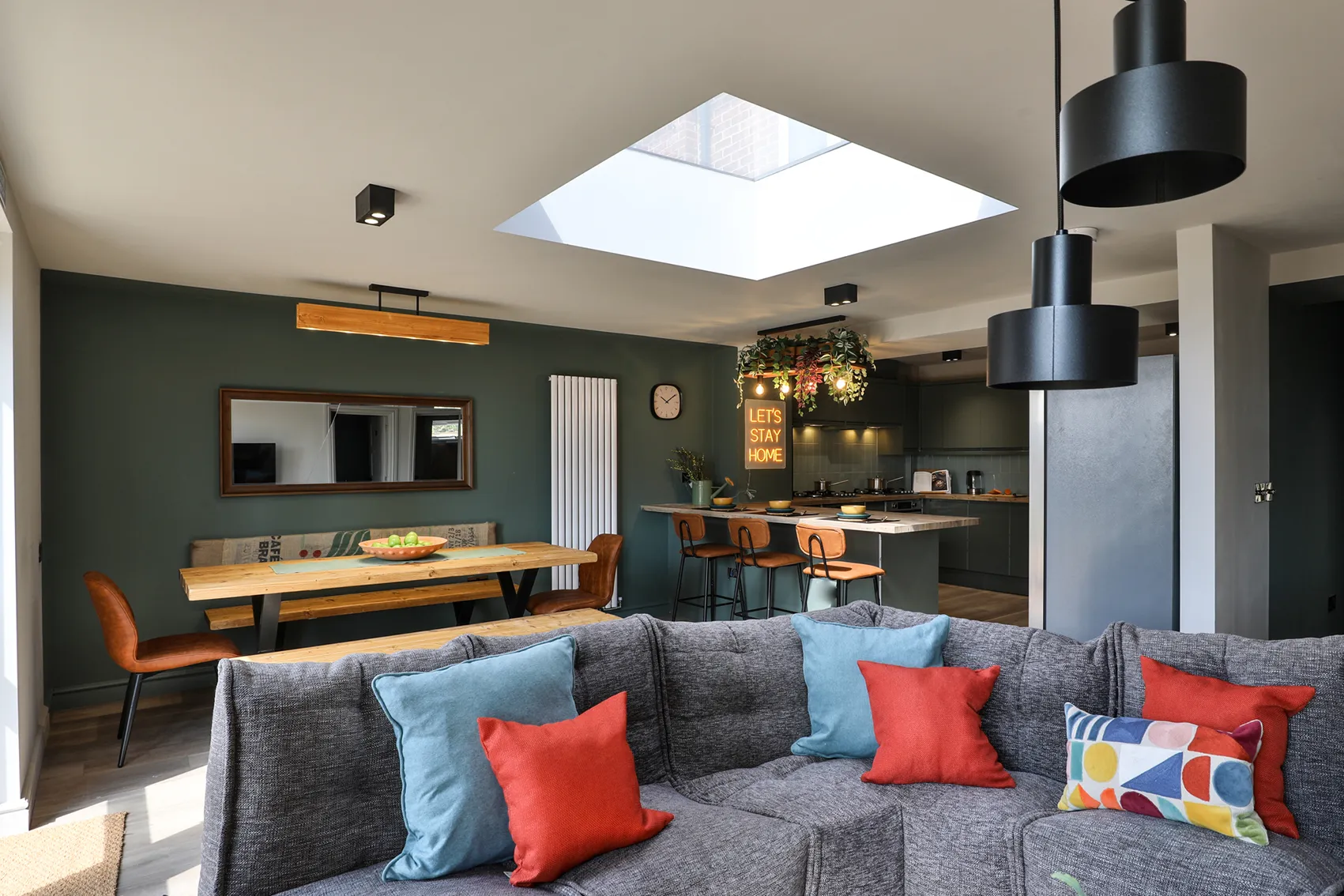
At B-Hive Living, we take pride in empowering our residents to lead a more connected, healthy and fulfilling lifestyle through our multi-award customer and community experience.
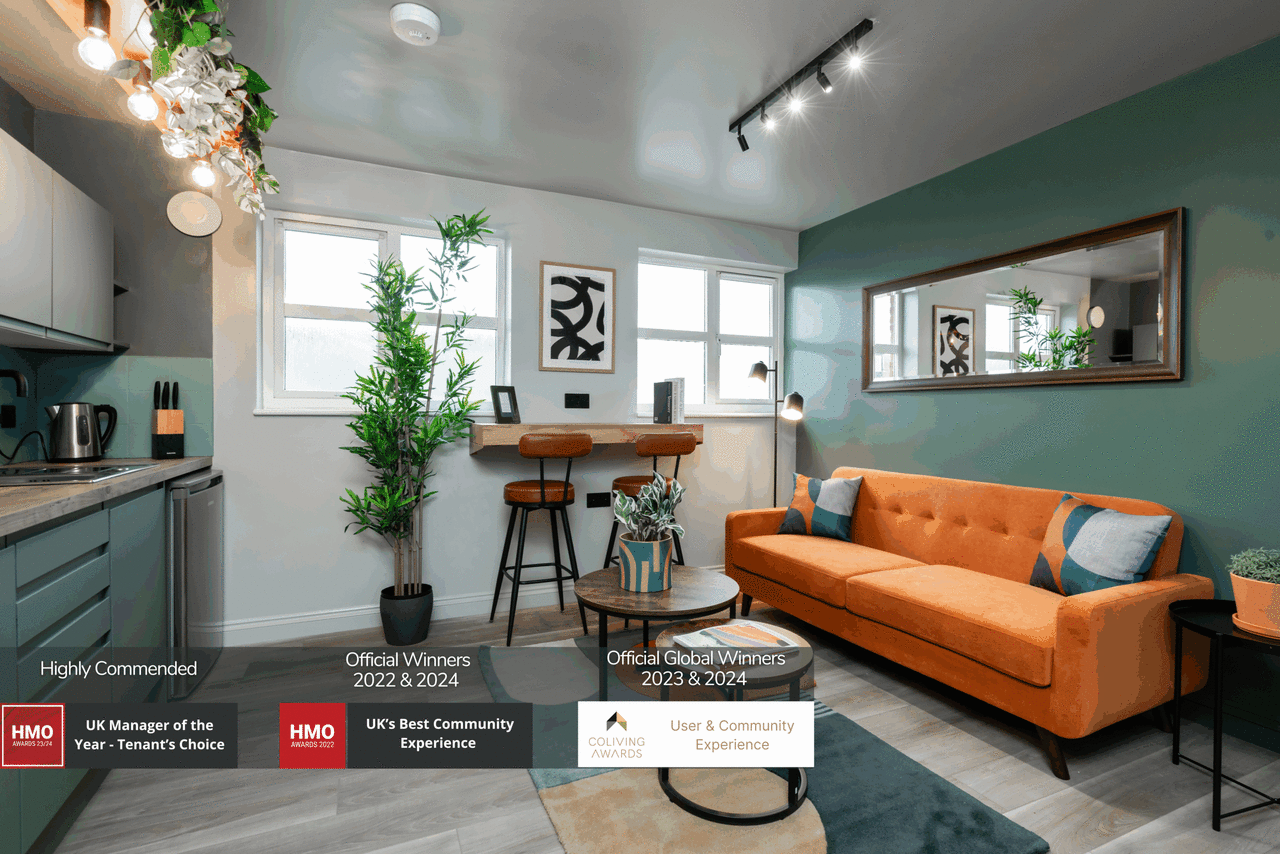
Our ethos and cutting-edge strategies have enabled us to earn the accolade of the best shared-living customer experience in the UK twice and the world for the past 3 consecutive years.
Below, we offer five strategies for both new and established investors, landlords and managing agents to embrace personalisation, and to maximise your potential for financial success in HMOs and rental management management in general. If you want to know more, feel free to access our landlord guide here.
First Impressions Matter
Make a memorable first impression by surprising new tenants with a thoughtfully curated welcome pack upon check-in. From local treats and helpful guides to personalised notes, each item is carefully chosen to ensure new tenants feel welcomed, informed and excited to be a part of your coliving HMO community and rental property.
Make easy for tenants to connect
Ensure seamless connectivity for tenants by providing reliable and secure WiFi access throughout the property. Anticipate their connectivity needs and address any issues proactively to enhance their overall experience. Additionally, offer multiple channels of communication, including feedback forms and reviews, to gather real-time feedback and improve services based on tenant preferences and needs.
Create Memorable Experiences
Organise social events, networking opportunities, and wellness activities tailored to your tenant’s interests, such as fitness classes, cooking workshops and game nights. Encourage participation and collaboration to foster a vibrant atmosphere.
Tech-Enabled Convenience
Offer smart home features like app-controlled thermostats and keyless entry systems, empowering tenants to customise their living space according to their preferences. Additionally, ensure seamless connectivity with reliable high-speed internet access throughout the property.
Forge Local Business Partnerships
Collaborate with nearby businesses and organisations to diversify and improve your ability to deliver a personalised experience to your tenants. They want to experience the local place fully so guide them to the best and trendy hangout spots while contributing to the local economy. A win- win solution for all!
Customer experience in coliving HMOs and rental management directly impacts your business’s reputation, customer loyalty, and financial success.
Given the imminent abolition of Section 21 ‘no fault’ evictions, delivering a superior tenant experience will become even more important and strategic. Tenants who are treated fairly and well become more cooperative, leading to longer tenancies and reduced turnover, ensuring a steady rental income and reducing the costs and efforts associated with finding new tenants.
In an industry where competition is increasingly becoming fierce, creating exceptional customer experiences has become a crucial differentiator for success. For those who like us wish to take their tenant experience to the next level, we’ve recently compiled a full landlord guide full of our tried and tested strategies to deliver a superior customer experience.
You can download our full landlord guide to the ultimate HMO Customer Experience (CX) here.
Williams Johnson is the co-founder and CEO of B-Hive Living – a multi-award winning coliving brand, operator and asset manager of coliving properties with a strong track record of best-in-class design, investment and management practices. Our mission is to empower professional renters to lead a more connected, healthy and fulfilling lifestyle through co-living. This relentless focus on our residents’ well-being ensures a sustained demand wherever we operate.
As a wellness-focused coliving brand, our mission is to drive social change through exploring and promoting the concept of living well. We build nourishing shared living environments. We design them to foster connection and elevate the lifestyle and wellbeing of our residents. Here are the four pillars of our live well concept that we developed over the recent years. You can apply them in your daily life, often at a small or no cost, to achieve a more connected, healthy and fulfilling lifestyle.
Biophilic design – living well starts at home
Humans possess an innate tendency to seek connections with nature and other forms of life. While we are all different, there are many elements of a building design that almost universally affect how we feel within a space. These include thermal comfort, shapes, colours, symmetry and so on. It is called biophilia. Since people spend around 90% of their time in built environments, it’s what we strive to provide in our Hive Homes. And many features associated with health and wellbeing can be easily incorporated into a home.
Surround yourself with nature
The benefits of experiencing and interacting with nature for physical and psychological well-being are well documented. Your home should ideally have plenty of nature around. It should have access to a garden to relax, exercise and feel more connected with yourself and others. Try introducing amenities there that harness and attract wildlife, like in the photo below. Interestingly, according to recent research, the UK population has spent more than £200 m on bird food during the pandemic. It’s because of our biophilic inclinations that we turn to in a crisis.
If all that is not possible because you live in a heavily urbanised neighbourhood, try venturing out to find a patch of greenery that’s nearest to you. Spend time there every day if possible. It will soothe you and relieve the tensions of the daily modern life.
But it’s not only outdoors that you can connect with nature. Bring the nature inside the home by filling it with plants and other elements of nature. Interiors featuring natural elements are much more healthy, relaxing and allow for more focus. Here are some great plants to keep at home for their calming and cleansing effects: jasmine, lavender, snake plant, aloevera, gardenia, spiderplant, valerian, English ivy.
Let in natural light
Natural light does have mood boosting qualities and direct correlation to our mood, happiness and general wellbeing. Especially morning light can have a huge impact on our health and happiness. So make sure you have breakfast near a window with plenty of natural light.
If you’re lucky enough to be designing your home from scratch, opt for building orientation that provides a lot of natural light, and plan for larger windows and skylights.
But there are other ways to flood your home with mood boosting sunlight. You can reflect light with mirrors, go for reflecting materials in your interior design, and choose a front door with a glass panel. Clearing cluttered window sills can also release more light than you would think!
A simple way to make use of light for your general wellbeing is also using dimmer switches rather than simply choosing to have the lights on and off. It’s an example of how we give our Hive residents a greater sense of control and comfort by allowing personalisation of their space.
Go for natural materials, shapes and colours
Our secret to a home supporting your overall health is mixing natural and reclaimed materials with artifacts of modern life and technology. The Hives feature lots of reclaimed wood, handcrafted furniture, and upcycled items.
It’s incredible how you can give life to old items by thinking out of the box and reinventing the old. And there is no limit to what you can create. Here is the result of our upcycling project that gave new life to an old surfboard, old railway sleepers and whiskey barrels in our secret garden. Upcycling in its simplicity transforms products, waste materials, useless and unwanted products into new materials or products of better quality and for better environmental value.
It makes a huge difference for interior design when you go for shapes and colours that occur in nature. Green is the prime colour of the world, and that from which its loveliness arises. So combine it with colours of the natural environments you enjoy the most. Remember to use organic shapes in your decorations – they are guaranteed to make you feel good.
How we do it
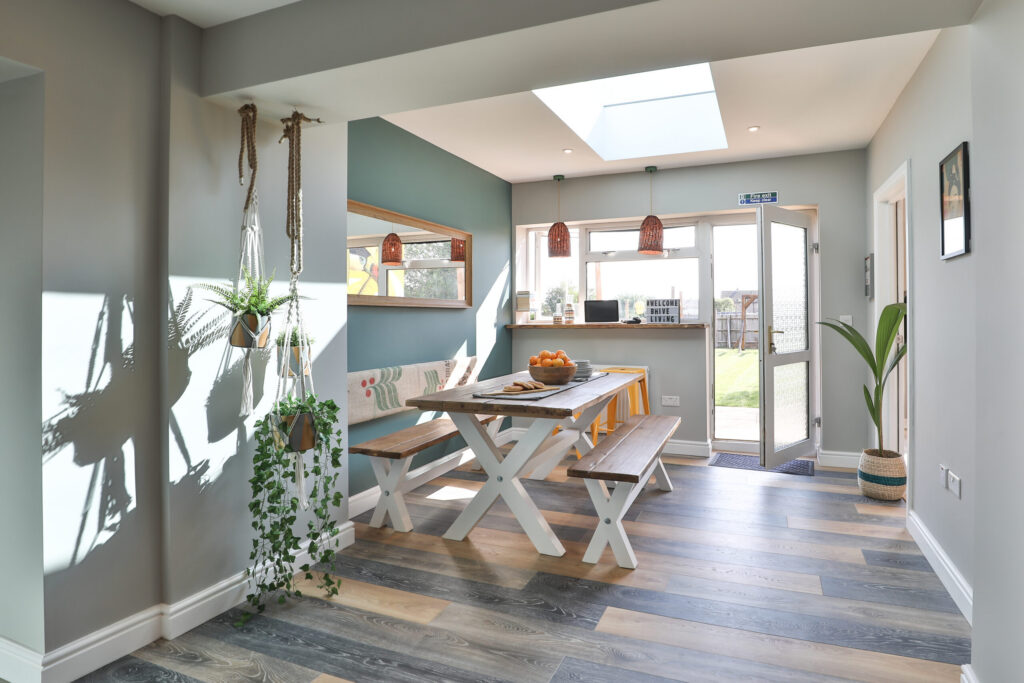
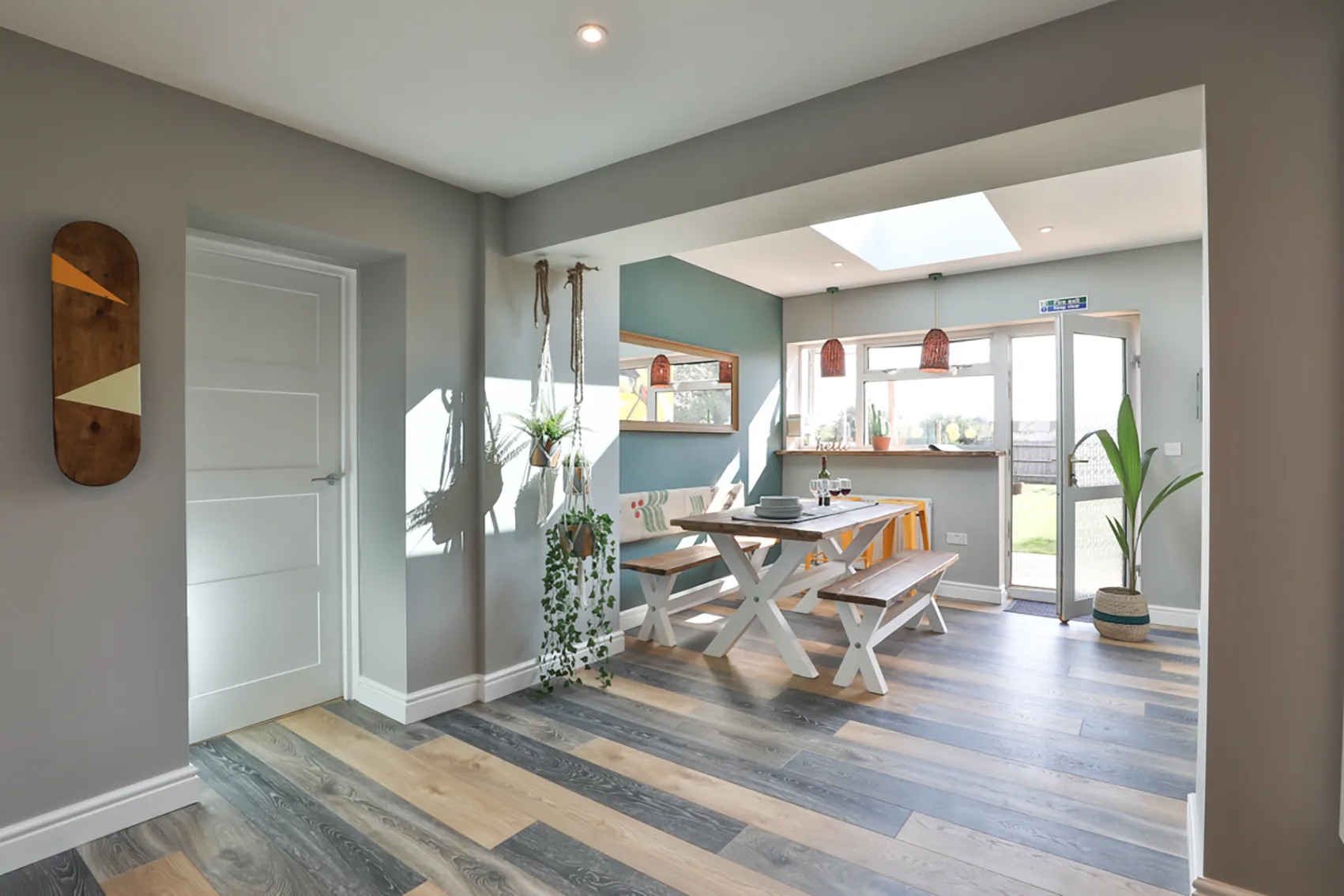
Here is an example of how we introduce biophilic design in our Hives. Take this small communal space. We combined abundant daylight and plant life, known to lower the heart rate and blood pressure, with reclaimed wood and soothing green wall colour, offering calm and comfort. The resulting space supports stress reduction and a tranquil mood.
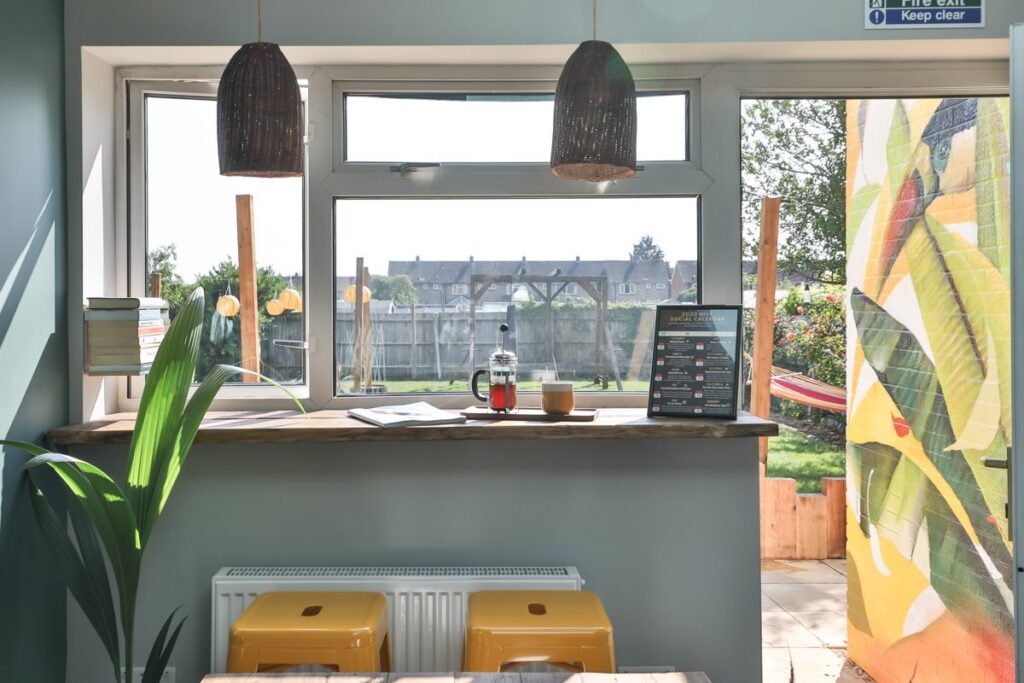
Since it’s a communal space intended to support connectivity, we broke away from uniformity in the flooring. We mixed three different types of wood to engage the senses. Notice the breakfast bar mounted in the window, overlooking 500 sqm of landscaped gardens. It can also serve as a ‘refuge’ for residents seeking to withdraw from group activity and focus on their own work. Our point here was to balance usability with the intent to positively influence people’s health, attitude and overall happiness.
From me to we – the importance of community
Personal wellness is linked not only to the environment, but also the people that surround you and how you interact with them. That’s why we strive to build spaces that foster connection and facilitate a harmonious and authentic way of sharing life.
Co-live and share
“As an ecologist, I can say that we humans are the ‘ultimate social animal’. Our whole evolution has been based on our ability to connect, communicate and be empathetic towards each other.”
We are biologically designed to live in communities of up to 150 people. It lets you meet and interact with people on a deeper level so that we can ultimately achieve a fulfilling lifestyle. At B-Hive Living we found that diversity is key to an exciting lifestyle. Surround yourself with people from different backgrounds that share a positive outlook on life. If your mind is set on living alone, find ways to participate in communal activities and give back to society. Find ways to share: your skills, knowledge, resources, experiences. You can read about how our resident Max went about it in the middle of lockdown here.
Participating in society in a meaningful way as well as coliving makes you open to explore new ways to relate to other people. Learning to respect and accept the differences will make you question some old assumptions and beliefs you might have. You will therefore learn to unite, collaborate, and exchange. This is how we manage our Hive communities at B-Hive Living.
Find your tribe
We recruit the right people for our Hives by means of our stringent vetting process. It results in a inclusive, diverse and vibrant community with plenty of opportunities for personal and professional growth. If you are anything like our residents, what you can do in your daily life is look out for people with a positive attitude and friendly personality, and desire to socialise and contribute to the community. You will then end up being part of an eclectic community of people from all walks of life that contribute to your fuller understanding of the world and purposeful lifestyle. They say you are who you surround yourself with and there’s a lot of truth in that.
Approach people with trust and empathy. When people feel they can fully express themselves, they feel supported to reach their fullest potential.
At B-Hive Living you have a number of solutions on tap. On top of our social events calendar, our life, nutrition and fitness coaches are at the disposal of our residents. The Hives also feature green outdoor areas, workout facilities, kitchens adjusted for multiple users, etc. They are all designed to inspire healthy habits and a more fulfilling lifestyle. With a little bit of motivation and knowledge, you can achieve it on your own too.
Healthy habits
Most of every day you go through is made of habits you’ve developed in the course of your life. The trick to a healthier and more fulfilling lifestyle is to hack those little habits and turn them into more life-enhancing ones. From getting well hydrated first thing in the morning to taking control of snacking, to ongoing learning of new skills, there are multiple tricks you can use to elevate your lifestyle with minimum effort. You will find some of them on our blog!
Social life
To sustain connections you’ve made with awesome people, and possibly turn them into lifelong friendships, take good care of your social life. Make time for people you care about. Change your surroundings once in a while. Be open to meeting new people. At the Hives we facilitate it by providing a monthly calendar of engaging social and wellness events. They not only involve our residents, but also connect them to the local communities.
Ethics
“there isn’t a choice between human and financial success, they are one and the same.”
Phillipa and Tom Carrier, Designed for Wellbeing
We believe it is possible to create a profitable enterprise while doing good, and that the same rule can be applied in everyone’s life. Having an ethical and sustainable lifestyle does a whole lot of good to the world as well as your own holistic wellbeing.
Stay sustainable
Sustainable living involves reducing the amount of Earth’s resources that you use to help protect it. It sounds grandiose, but every one of us can have a share in this goal.
There are a number of ways you can do this. You can limit the amount of energy and water you use, use eco-friendly products and alter your diet to include more consciously sourced produce. Limiting the use of plastic will make a big difference. Go for your favourite reusable items, like a water bottle or cup. Another way to make your and everyone else’s life a bit better is giving away used items. If you don’t use a product or wear a piece of clothing anymore, give it to a charity shop or someone you know would make use of it to help reduce waste and make space for you to breathe fuller.
Rely on small local businesses
Our Hives are the result of a plethora of collaborations with an eclectic mix of inquisitive artists, dreamers and crafts people. Just a few of those featured in our blog are muralist Curtis Hylton, woodcraft artist Daniel Pereira, and painters and decorators Father & Daughter. Relying on small local businesses lets you discover absolute gems of local craftsmanship and art. It also makes you more connected to the local community, and often provides for a unique, higher quality and customised service for an affordable price!
Chat to us to share how you introduce elements of our live well concept in your daily life. We would love to hear from you!
B-Hive Living is a wellness-focused coliving brand operating properties in Oxford and Bicester, UK. We drive social change by exploring and promoting the concept of living well. We place it at the heart of our coliving design for a more connected, healthy and fulfilling lifestyle of our residents.
Searching for rooms for couples for rent in Bicester? You’ve probably noticed the rental market here is surprisingly competitive. As Bicester grows, thanks to Bicester Village, strong transport links and steady job opportunities, quality accommodation for couples has become increasingly hard to find.
Piyush and Rachel, a couple living at B-Hive Living, put it perfectly: “One of the biggest hurdles has been finding spaces that cater to the specific needs of couples. Many places either don’t fit our needs or come at an exorbitant cost.”
This tension, between wanting independence and affordability, privacy and community, is something a growing number of couples in Bicester are navigating.
Why Finding Rooms for Couples for Rent Is So Difficult
Most rental rooms in Bicester are designated for single occupancy only. Landlord preferences and licensing restrictions mean couple-friendly rooms are genuinely rare, leaving you with very few suitable choices. As one couple told us: “It often felt like the market wasn’t built with couples in mind.”
Even when you do find a room, there’s another challenge: a space designed for one person rarely works for two. Couples need more storage, more floor space, quiet zones for remote work, and better soundproofing. Without these, even a newly renovated room can feel cramped or stressful. As Piyush and Rachel shared: “Finding something economically well-suited, with space to live comfortably together, made all the difference.”
Then there’s the balancing act between privacy and community. Couples want a space that feels like their own sanctuary, but they also appreciate opportunities to socialise and feel part of something. The problem? Most shared houses don’t strike that balance well, leaving you feeling either isolated or constantly “on show.”
And finally, affordability. The few couple-friendly rooms that do exist typically cost significantly more because they’re larger, rarer, and utilities increase with two occupants. Many couples end up compromising on budget, comfort or location, none of which supports a stable home life.
What Couples Actually Need
From speaking with couples in our B-Hive Living communities, a clear picture emerges. Couples want privacy that genuinely feels like home, a retreat, not a compromise. They want community on their own terms, with social opportunities that don’t require them to be “on” all the time. They need flexibility as life evolves, whether that’s changing jobs, starting new hobbies, or growing a business.
Quality matters too. Couples want modern, well-maintained spaces without the stress of difficult landlords or noisy housemates. And they want thoughtful design: communal lounges, gardens, and coworking nooks they can enjoy when they choose, with the option to retreat into peace when they need it.
The truth is, there’s a significant gap in Bicester between single-occupancy rooms and family-sized homes, leaving couples competing in an ill-fitting market. But that’s finally changing.
A Better Solution: Purpose-Built Flats for Couples in Bicester
At B-Hive Living, we’ve designed what we call Self-Living spaces—homes that blend privacy with community, independence with connection, specifically for couples.
Our latest development, Wise Court, offers fully furnished studios and private flats designed with couples in mind. Each space includes en-suite bathrooms, fully equipped kitchens, spacious layouts with clever storage, and access to peaceful shared areas and private parking. We’ve also curated an international community with regular events, so you can connect with neighbours when you want to, and enjoy your privacy when you don’t.
It’s built to give couples the space, stability and comfort to grow together—without sacrificing connection or financial clarity.
Find Your Home Together
If you’re searching for rooms or flats for couples for rent in Bicester, prioritise a space that respects your privacy, supports your ambitions, and grows with you. The right home should make life easier, not more complicated.
Wise Court opens this month—thoughtfully designed for couples from the ground up, not adapted as an afterthought. It’s where privacy, comfort and community finally exist in perfect balance.
Book your tour: anton@b-hiveliving.com
About B-Hive Living: B-Hive Living is a multi-award-winning coliving brand, operator, and asset manager with a strong focus on wellness-driven design and tech-enhanced operations. Our mission is to empower professional renters to lead a more connected, healthy, and fulfilling life. This relentless focus on our residents’ well-being ensures sustained demand wherever we operate. For more information, visit www.b-hiveliving.com or contact info@b-hiveliving.com.
Starting your career or relocating to Bicester or Oxford for work? You might wonder: Do I really need a car? The good news: you don’t. With smart use of public transport, cycling, and flexible mobility options, living without a car in Bicester or Oxford is convenient, cost-effective, and lifestyle-friendly.
Bicester is increasingly supportive of car-free living. The Oxfordshire Local Transport and Connectivity Plan (2022) aims to reduce car dependency, while the Bus Service Improvement Plan (2025) ensures more reliable, frequent bus routes.
1. Public Transport: Efficient and Stress-Free Commuting
Rail Links
Bicester Village and Bicester North stations connect the town to Oxford in ~20 minutes and London Marylebone in ~1 hour. For working professionals, this means you can commute to major employment hubs without the cost and stress of a daily car commute.
Buses
Frequent bus services link Bicester to surrounding towns and the Oxford city centre. With recent 2025 upgrades, buses are more reliable and punctual, perfect for avoiding traffic jams during rush hour.
Taxis
For late-night returns, early-morning trains, or when you simply need door-to-door convenience, local taxi services are a great complement to public transport. 001 Taxis Bicester offers 24/7 coverage with a mobile app for easy booking — ideal for professionals who need reliable transport outside standard commuting hours.
Why this works for working professionals:
Cost-effective commuting without car ownership.
Reduced stress compared to driving in traffic.
Flexible travel options, including taxis for late or irregular hours.
Easy access to work, after-work social activities, and weekend trips.
Tip: Choose a home near a station or main bus route for maximum convenience.
2. Cycling and Walking: Quick, Healthy, and Flexible
Bicester is compact and flat, with growing bike infrastructure, including the London Road Active Travel corridor. For daily commuting within town or to nearby offices, cycling or walking can be faster than driving, especially during peak hours.
Why it’s great for working professionals:
Saves money on commuting.
Keeps you active and healthy — no gym membership needed.
Flexible: cycle to work, shop, or meet friends in town without worrying about parking.
Tip: An e-bike is a smart investment for longer rides, especially if you plan to commute to neighbouring villages or the outskirts of Bicester.
3. Car-Share and Short-Term Hire: When You Need a Car
Sometimes a car is necessary, for weekend trips, business errands, or grocery shopping. Car-sharing and short-term hire services like Enterprise Car Club allow you to book a car by the hour or day.
Why this works for working professionals:
Only pay when you need a car, which avoids monthly ownership costs.
Ideal for business trips or weekend getaways.
Combines seamlessly with public transport and cycling for daily commuting.
Tip: Plan trips around office hours and check booking availability to avoid last-minute stress.
4. Car-Free Lifestyle Hacks for Bicester Professionals
Home location matters: Living close to train stations, bus routes, or cycle-friendly streets makes commuting easier.
Mix and match modes: Walk or cycle for local errands, take the train or bus to work, and use car-share for occasional trips.
Plan for flexibility: Even without a car, you can still enjoy weekend trips, client meetings, or social activities by combining these options.
By combining these options, working young professionals and expats can enjoy a cost-effective, convenient, and sustainable lifestyle in Bicester without the hassle of car ownership.
For working young professionals and expats in Bicester, living without a car isn’t just possible, it can be smarter, cheaper, and more enjoyable. Frequent public transport, growing cycling infrastructure, and flexible car-sharing options make commuting, socialising, and weekend adventures easy. Say goodbye to traffic stress and expensive car bills, and hello to your new mobile, car-free lifestyle.
About B-Hive Living: B-Hive Living is a multi-award-winning coliving brand, operator, and asset manager with a strong focus on wellness-driven design and tech-enhanced operations. Our mission is to empower professional renters to lead a more connected, healthy, and fulfilling life. This relentless focus on our residents’ well-being ensures sustained demand wherever we operate. For more information, visit www.b-hiveliving.com or contact info@b-hiveliving.com.
Spring and summer are synonymous with festival season in the UK, and 2025 is shaping up to be an unforgettable year for live events. If you’re in Oxford and keen to explore the country’s vibrant festival scene, we’ve got your perfect seasonal soundtrack lined up.
Here are some of the most anticipated UK festivals happening in spring and summer 2025:
Wychwood Festival
📍 Cheltenham Racecourse
📅 May 30 – June 1, 2025
Looking for a family-friendly festival with a relaxed vibe? Wychwood, held just over an hour from Oxford, is a great way to kick off the season. With sets from Shed Seven and James, plus more than 100 workshops, it’s a wholesome start to summer fun.
Isle of Wight Festival
📍 Seaclose Park, Newport
📅 June 19 – 22, 2025
Hop on a ferry and head south for a legendary island experience. With a history stretching back to the 1960s, this year’s Isle of Wight lineup includes Sting, Stereophonics, Justin Timberlake, and Jess Glynne. A great mix of nostalgia and fresh energy.
Glastonbury Festival
📍 Pilton, Somerset
📅 June 25 – 29, 2025
The crown jewel of British music festivals, Glastonbury is back and bigger than ever. This year’s lineup boasts legendary names like Neil Young, rising pop icon Olivia Rodrigo, and indie powerhouse The 1975. Don’t miss the immersive Shangri-La field or the eclectic vibes at the Deluxe Diner & Rocket Lounge.
BST Hyde Park
📍 Serpentine Rd, London
📅 June 27 – July 13, 2025
Set in the heart of London, British Summer Time (BST) Hyde Park is a city-centric celebration across three weekends. 2025 features headliners like Stevie Wonder, Sabrina Carpenter, and Zach Bryan, offering something for fans of soul, pop, and country. With easy access from Oxford via train, this one’s perfect for a weekend music escape.
Henley Festival
📍 Leander Club, Henley-on-Thames
📅 July 9 – 13, 2025
Just a short drive from Oxford, the Henley Festival is where black-tie meets bass lines. This elegant riverside event fuses music, art, and comedy in a unique setting. Expect stylish crowds and stunning performances from Diana Ross, McFly, and Rick Astley. Dress up, sip some fizz, and enjoy a night of pure class.
Latitude Festival
📍 Beccles, Suffolk
📅 July 24 – 27, 2025
Latitude is more than a music festival—it’s a cultural haven. Set in scenic Suffolk parkland, the 2025 edition features performances by Sting, Fatboy Slim, and Snow Patrol, along with theatre, poetry, and comedy stages. It’s an ideal pick for creative souls and families alike.
The UK’s 2025 festival circuit promises unforgettable moments, whether you’re raving at midnight or swaying by the riverbank. Pack your tent, book your train, and mark your calendar, because this summer, the soundtrack of the UK is waiting for you.
As spring stretches across the English countryside, the trees begin to bloom, and daffodils brighten quiet paths. The air carries a gentle warmth that invites us outdoors. In Oxford, college gardens come to life, and riverside paths fill with the sound of footsteps. The city’s charm is refreshed by the season. It’s the time of year when walks feel lighter, bike rides feel longer, and Oxfordshire, from Oxford to Bicester, feels full of new life.
Whether you’re strolling through Oxford or cycling in Bicester, spring calls you to nature. Here’s a guide to some of the best places to walk, cycle, and relax:
Walking Trails:
Oxford Green Belt Way (Oxford) This 50-mile circular route surrounds Oxford. It takes you through woodlands, meadows, and along riverbanks. It’s a great way to explore Oxford’s natural beauty. 🔗 Route details and map
Christ Church Meadow (Oxford) In the heart of Oxford, this peaceful meadow stretches along the Rivers Thames and Cherwell. You’ll see views of Christ Church College. It’s a favorite for locals and visitors alike. 🔗 Christ Church Meadow information
Brasenose Wood (Oxford) On the outskirts of Oxford, this ancient woodland park offers quiet paths and diverse flora. It’s a perfect retreat for nature lovers.
Bicester Town Circular Walk (Bicester) This 2.9-mile walk explores Bicester’s historic sites and green spaces. Starting at Market Square, it takes about 1 hour and 25 minutes to complete. 🔗 Route map and description
Cycling Routes:
Oxford Canal Towpath (Oxford) This flat, scenic route along the Oxford Canal begins at Hythe Bridge. You’ll pass canal boats and wildlife. It’s a peaceful ride through the city’s waterways.
Thames Path to Abingdon (Oxford) This route follows the Thames Path south from Oxford. It offers both urban and rural views with the river by your side. 🔗 Thames Path route details
Bicester to Winslow Loop (Bicester) This 47.1 km loop takes you from Bicester to Winslow and back. It’s popular among local cyclists and offers a mix of flat and gently sloping terrain.
Relaxation Spots:
University Parks (Oxford) Near Oxford’s city center, these expansive parks are perfect for walks, picnics, or simply relaxing. The Mesopotamia Walk along the river is particularly scenic. 🔗 University Parks information
Garth Park (Bicester) A well-kept park with gardens, a children’s play area, and regular events. It’s ideal for families or anyone looking to relax in a peaceful spot. 🔗 Garth Park details
Longbridges Nature Park (Oxford) This peaceful park along the River Thames features open grasslands and mature willows. It’s a great spot for picnics and wildlife watching.
Chilswell Valley (Oxford) Known as ‘Happy Valley,’ this area in South Hinksey offers streams, reedbeds, and rare grasslands. It’s a hidden gem for those seeking peace and quiet.
Meadow Lane Nature Park (Oxford) Adjacent to the River Thames, this park offers open grassland and mature trees. It’s a tranquil place for riverside walks.
Before You Go:
Check Local Guidelines: Ensure the trails and parks are open and accessible.
Weather Conditions: Be prepared for changing weather; dress appropriately.
Trail Conditions: Some paths may be muddy or uneven; sturdy footwear is recommended.
So whether you’re strolling under a canopy of blossom in Christ Church Meadow or simply enjoying the quiet charm of Garth Park in Bicester, spring offers the perfect backdrop for slowing down and reconnecting with the world around you. These paths, parks, and places aren’t just routes on a map, they’re small invitations to pause, breathe, and notice the season unfolding, one gentle step (or pedal) at a time.
About B-Hive Living: B-Hive Living is a multi-award-winning coliving brand, operator, and asset manager with a strong focus on wellness-driven design and tech-enhanced operations. Our mission is to empower professional renters to lead a more connected, healthy, and fulfilling life. This relentless focus on our residents’ well-being ensures sustained demand wherever we operate. For more information, visit www.b-hiveliving.com or contact info@b-hiveliving.com.
Oxford – the premium market for Coliving HMO investment in the UK
Location, location, location is a popular cliché in property investment for a good reason. It’s sound advice – except for one thing: most people struggle to select the right location for their HMO investment.
Location is paramount in the world of HMO and property investment in general and in this article, we will look at a real location example – Oxford. Few places hold as much potential as Oxford when it comes to Coliving HMO investment.
Coliving – more than an enhanced form of HMO
But before we jump into that, let us briefly explain the difference between a traditional HMO and a Coliving HMO. House in Multiple Occupation (HMO) has been a popular investment strategy in which a house or flat is split into rooms and let by different tenants separately, providing investors with lower void rate and higher yield from multiple streams of income. Coliving HMO is an evolution of this strategy where progressive investors and operators layer design, services, technology and unique community experience to offer a superior product, achieving an even higher yield and pound per sqm than traditional HMOs.
In summary, Coiving HMOs are expected to offer more than the typical HMO given their focus on design, convenience and community and achieve a better return, as a result.
Why does location matter so much?
Let’s start with the basics. When investing in Coliving HMO, you will most certainly have to alter the property in many ways, but you cannot change its location. Locations are also not static – they are constantly changing, and they may evolve to become more or less desirable affecting the rental demand for your property.
As for the rest, it’s a simple case of supply and demand. Coliving HMOs in locations with limited supply and abundant demand usually appreciates quicker, giving you a better return on investment. That’s why location is often the single most important factor in property investment as it has a direct impact on your property’s value, rental yield and capital appreciation potential.
Choosing a place to invest in a Coliving HMO isn’t a subjective matter as when you buy a home to live in. It’s based on a fairly static set of attributes like local market trends and demand, accessibility, access to amenities, local economy and job market and more. This is particularly true for Coliving HMOs which are mainly rented by professional tenants.
What makes Oxford a great location for Coliving HMO investment?
Oxford is a major economic hub with many world-class universities, research centres and companies able to sustain demand and ensure sustainable capital growth for your Coliving HMO investment. Here are a few reasons why Oxford is a great location to invest in.
Constrained Supply
The availability of rental properties in Oxford is relatively limited, contributing to its investment appeal. The city has enjoyed strong population and employment growth in recent years. Yet, the housing supply has failed to keep up, which has contributed to steady rental growth in Oxford with the city commanding a 15% premium over other locations in Oxfordshire.
Diverse & Abundant Tenant Base
Oxford is home to almost 5,000 businesses providing around 113,900 jobs in addition to a large student population of over 40,000. 62% of the city’s population is of working age with an average salary over £ 40K p.a. At B-Hive Living, we cater for expat professionals from a diverse range of leading industries, from engineering to biotech. This dynamic economic cluster ensures a steady flow of new renters, a consistent occupancy rate and ultimately a resilient stream of income.
Rising Rental Yields
According to a recent Aldermore report, Oxford is one of the top three cities in the UK with great potential for landlords to invest (together with Bristol and Cambridge). Rental yields for Oxford HMO properties are on an upward trajectory, making it an attractive investment option. This means investors can expect to see their returns grow over time.
Many techniques can help you to choose the right location and strategy to invest in, yet there is no substitute for local knowledge. As an award-winning HMO coliving developer and operator in Oxfordshire, we have a decade of experience and in-depth know-how of building and managing the best properties locally and delivering the best tenant experience and rental yields in Oxford and beyond.
Do not hesitate to get in touch. We will help you refine, develop and manage your next coliving investment.
At B-Hive Living, we’ve been at the forefront of the coliving movement since its inception having won multiple national and international awards for our innovative business model and best-in-class management practices. Whether you wish to make your first step into property investment in 2024 or have a traditional HMO or building in Oxford and surrounding areas you wish to reposition as a professionally managed coliving asset, we’re here to support you every step of the way through our know-how, technology and innovative business model.
Williams Johnson is the co-founder and CEO of B-Hive Living – a multi-award winning coliving brand, operator and asset manager of coliving properties with a strong track record of best-in-class design, investment and management practices. Our mission is to empower professional renters to lead a more connected, healthy and fulfilling lifestyle through co-living. This relentless focus on our residents’ well-being ensures a sustained demand wherever we operate.
Relocating to a new place is always an exciting yet challenging experience. Here are 5 tips before moving to Bicester & Oxford to help you settle in smoothly.
1. Cost of Living
Oxfordshire is known for its high cost of living, largely due to its proximity to London, thriving industries, and the presence of one of the world’s top universities. However, this also means great career opportunities and a high standard of living.
Here’s a rough idea of costs:
En-suite double bedroom: £700 – £1.200 per month
Self-contained studio: £1.000 – £1.600 per month
One-way local transport ticket: £2.50 – £3.00
Takeout cappuccino: £3.20 – £4.00
Takeout meal: £8.00 – £15.00
2. Getting Around
Uber is not widely available in Bicester, Oxfordshire. While you might find some Uber drivers occasionally, the service is quite limited compared to larger cities like Oxford or London. Many people in Oxford rely on buses and cycling, as the city is quite compact and bike-friendly.
Public Transport: Local buses connect Oxford and surrounding areas. If you travel frequently, a day pass is a cost-effective option. More info:www.traveline.info
Cycling: Cycling is one of the most popular and convenient ways to get around Oxfordshire. The area is well-equipped with dedicated cycle lanes, making it a safe and efficient mode of transport.
Taxis: Taxis are widely available in Oxfordshire, operated by multiple private hire companies. Fares vary depending on distance and time of day, and booking in advance is recommended, especially during peak hours or for long-distance travel. Uber operates in Oxford, but availability can sometimes be limited compared to larger cities like London. One option is Royal Cars, one of the largest taxi services in the region: https://royal-cars.com/
Train: Oxford is very well connected by train. The main station, Oxford Railway Station, is just a short walk from the city centre and offers frequent services to major destinations, including:
London Paddington – About 50-60 minutes
London Marylebone – Around 1 hour
Birmingham New Street – Around 1 hour 10 minutes
Reading – It takes about 25 minutes and connects to many other UK destinations.
There’s also Oxford Parkway Station, which provides an alternative route to London Marylebone via Chiltern Railways.
3. Culture & Etiquette
Adapting to local customs is essential for a smooth transition. Here are a few key etiquette tips:
Keep one arm’s length when speaking with others.
Being punctual is important; if you’re running late, inform the other party in advance.
If invited to someone’s home, it’s customary to bring a small gift (wine, chocolates, or flowers) as a token of appreciation.
4. Attractions in Bicester
Bicester offers more than just a convenient location—it’s home to several notable attractions:
Bicester Village: A luxury shopping destination featuring high-end brands and attracting visitors worldwide. Here are 7 top tips for a perfect day out in Bicester Village: https://b-hiveliving.com/bicester-village-shops
Garth Park: A scenic public park hosting outdoor events like jazz festivals and Proms Night.
Bure Park Nature Reserve: A beautiful green space with walking trails and abundant wildlife.
St. Edburg’s Church: A historic 12th-century church with stunning stained-glass windows and local memorials.
Bicester Heritage: A hub for classic motoring, car shows, and vintage markets, housed in a former RAF bomber station.
5. Community & Lifestyle
One of the best aspects of living in Bicester and Oxford is the vibrant community. Whether you’re a student, professional, or expat, engaging in local events and social groups will help you settle in faster.
Oxford’s International Community: With the university attracting students and professionals from around the world, Oxford is a culturally rich and diverse city.
Networking & Social Events: Platforms like Meetup and Eventbritehost various activities, from business networking to cultural meet-ups.
Coliving Spaces: If you’re new to the area, consider B-Hive Living, where you’ll find a supportive community of professionals with shared interests.
Final Thoughts
Moving to Bicester or Oxford can be a rewarding experience with proper preparation. By understanding the cost of living, transportation options, cultural norms, and local attractions, you’ll be well on your way to settling into your new home.
If you’re looking for a hassle-free rental experience, B-Hive Living offers premium coliving spaces tailored for professionals and expats. Contact us today to learn more!
Remote work in Oxfordshire is increasingly attractive for professionals seeking a balanced lifestyle without sacrificing city amenities. The county offers a spectrum of living environments, from historic university quarters to quiet market towns and countryside villages. When choosing where to base a home office, you weigh factors such as broadband reliability, space for a dedicated workspace, price per square metre, and access to cafés, libraries, parks and family-friendly services. Oxfordshire’s towns and villages, including central Oxford, Didcot, Abingdon and Witney, each bring a distinct rhythm to your working week. The right base can support focus, collaboration, and a healthier daily routine.
Further, the county’s transport links, green spaces and independent amenities offer flexibility for hybrid schedules. Some areas allow quick hops to meetings in Oxford or Didcot while preserving the tranquillity needed for deep work, while others deliver a strong sense of community with local co-working spaces and well-connected libraries. This guide outlines practical living options across Oxfordshire and shares tested tips to map a sustainable routine. It also flags common missteps when relocating for work and points to local resources that support flexible, productive living across the region.
Decisions at a glance: where to base your remote work life
One-sentence takeaway: Oxfordshire offers a spectrum from dense city living to tranquil market towns, letting you tailor your base to your work and life balance.
City-centre Oxford
Living in the heart of Oxford puts you minutes from libraries, universities and a dense café scene—great for spontaneous meetings, quick-longer brainstorming sessions and a lively social life. The flip side tends to be higher rents and more noise during peak times, which means you’ll likely want a dedicated home workspace with good soundproofing. For remote work, proximity to public transport and central amenities can be a major plus, especially if you occasionally need to gather with colleagues or study in university libraries. A number of residents find that short street-level commutes leave more energy for focused work at home on quieter mornings.
Remote work in the city benefits from a coffee culture and close proximity to libraries, but you’ll want a quiet home workspace.
Suburban pockets: Headington, Summertown, Jericho
These areas blend city convenience with quieter residential streets. Headington offers easy access to hospitals and campuses; Summertown is known for village-like tranquillity with direct routes into central Oxford; Jericho provides a bohemian, independent vibe with a selection of co-working desks and friendly cafés. For remote workers, such pockets typically strike a balance between affordable space relative to the city centre and enough buzz to sustain social and professional networks. Noise levels can be manageable, and proximity to parks and walkways supports a healthier daily rhythm.
Market towns and villages: Abingdon, Didcot, Witney, Banbury
Market towns and villages across Oxfordshire tend to deliver space to spread out, often with comparatively lower rents and a slower pace. Abingdon sits beside the Thames Valley and can be appealing for those who value greenery and a walkable high street. Didcot, as part of the Science Vale, has a modern, growing feel with new housing and practical amenities for families and professionals alike. Witney offers a scenic setting in the windswept valley and good access to rural routes, making it attractive for those who prefer a more relaxed daily cadence. Banbury and nearby villages can also offer a blend of affordability and community-focused living, with pockets of robust broadband and local culture.
“A quiet home office and fast broadband are worth prioritising when choosing where to live in Oxfordshire.”
At a glance: a quick remote-work-ready itinerary
Define your preferred vibe: city centre, suburban pockets or market-town calm.
Check broadband reliability and space for a dedicated home office in each area you’re considering.
Arrange short stays (or budget-friendly trials) to compare daily rhythms and noise levels.
Assess housing types and storage for equipment, screens and furniture.
Evaluate nearby amenities: cafés, libraries, parks, healthcare and gyms.
Confirm transport options and typical travel times for occasional meetings in Oxford or Didcot.
Practical planning for bandwidth, space and daily life
Broadband and workspace
Across Oxfordshire, you’ll find a mix of areas with strong broadband coverage and pockets where speeds vary. When choosing a neighbourhood, it tends to be sensible to verify available providers and, if possible, test the actual service in your prospective home. A compact, well-lit room with a door can make a big difference for focused work, while a home with flexible layouts may help you switch between quiet concentration and collaborative work without leaving the house.
Transport and commuting realities
Remote work does not always mean no travel. Oxfordshire’s towns often offer decent rail and bus links for occasional meetings or coworking days away from home. If you foresee regular trips to Oxford or Didcot, factor in typical journey times during peak hours and consider how easy it is to park or access station facilities. It can be worth plotting a simple two-week calendar to see how travel fits with your work patterns and personal life.
Local services and green spaces
Good local services—pharmacies, grocery stores, post offices—and access to green spaces frequently improve daily life for remote workers. Parks, riverside paths and countryside walks can provide restorative breaks between tasks, helping to sustain long-term focus. The presence of nearby libraries or community hubs can also offer quiet spaces for occasional work or study sessions beyond the home office.
“A dedicated home office with good lighting can dramatically improve focus.”
Insider tips and common mistakes to avoid
Insider tip: prioritise a workspace-friendly home layout
When evaluating a property, look for natural light, quiet corners and adequate storage for equipment. Properties with flexible spaces—like a spare room that can double as an office or a part of a larger living area that can be easily partitioned—tend to support longer periods of productive work without feeling cramped.
Insider tip: test the infrastructure during peak times
Schedule a day when you plan to work from home at your potential new address and observe how traffic, noise and neighbours’ routines affect your concentration. If you can, arrange for a few video calls at different times to gauge the stability of your setup and ensure there are no hidden interruptions.
Common mistake to avoid: overlooking access to outdoor spaces
People frequently underestimate the value of outdoor space for breaks, exercise and mental reset. A home with a balcony, terrace or proximity to a park can noticeably improve wellbeing and help sustain productivity over the week.
Common mistake to avoid: underestimating local amenities and services
Distance to groceries, healthcare, childcare and social activities can affect work-life balance. It’s worth mapping essential services within a short radius to prevent daily frictions from creeping into your routine.
FAQs
Q: Which areas are most popular for remote workers in Oxfordshire? A: Areas around central Oxford with easy access to libraries and academia tend to attract remote workers who value proximity to cultural and academic resources. Suburban pockets such as Headington or Summertown, and market towns like Abingdon and Witney, are also frequently chosen for their quieter streets and practical amenities. Your choice often hinges on the balance you prefer between pace and space.
Q: How important is broadband in this county? A: Broadband is a key factor for most remote workers. While many areas offer robust service, it’s wise to verify speeds at your exact address and consider a plan that includes a reliable router and backup options where possible.
Q: Are there affordable towns for remote work? A: Yes. Some market towns and outer villages tend to offer comparatively lower housing costs while still providing good access to services. It can be helpful to compare two or three areas with a similar commute profile to find the best balance between price, space and convenience.
Q: How easy is it to meet colleagues when needed? A: Oxfordshire has a network of co-working spaces, libraries and cafés that can facilitate face-to-face collaboration on demand. Depending on your role, you may also schedule occasional meetings in Oxford or Didcot as part of a hybrid pattern.
Q: What should I test before moving? A: Test the workspace layout, lighting, acoustics and broadband stability; check access to nearby green spaces and essential services; and consider whether the area supports your daily routine, social life and any childcare needs.
Living well as a remote worker in Oxfordshire means blending focus with community. By choosing a base that matches your work rhythm, you can enjoy green spaces, good schools, and vibrant social life while keeping travel and commuting manageable. The county rewards careful testing and a practical mindset, plus a willingness to mix work zones with quiet corners. If you’re seeking a supportive, flexible living environment in Oxfordshire, B-Hive Living can help connect you with spaces that fit your pace.
Is coliving cheaper than renting in Oxford? For young professionals and remote workers eyeing Oxford or the Bicester corridor, housing cost considerations sit at the top of the decision list. The city’s rental market can be expensive, and the price gap between a private flat and a shared-living setup can significantly shape monthly budgets and daily routines. Coliving promises a straightforward approach: a private room, shared spaces, and a single all-inclusive price covering many essentials. But the real question is whether that simplicity translates into genuine savings, or if it comes with trade-offs in privacy and flexibility.
To answer this, you need to compare totals rather than headline rents. In Oxford, costs vary by neighbourhood, service level, and how long you intend to stay. Some coliving operators advertise all-inclusive rents that bundle utilities, high-speed internet, cleaning, and on-site management, while others present a base rent plus add-ons. Your actual expenditure depends on how much you use shared spaces, the exact location, and the tenancy terms. This guide breaks down the cost dynamics, flags potential charges, and offers practical checks to help you decide where your money goes further in Oxford or Bicester.
Cost breakdown in Oxford: what to compare
Takeaway: To know whether coliving is cheaper, you need to compare total monthly outgoings rather than rent alone, and understand what is included in the price.
Rent alone vs all-inclusive packages
Private rents are often quoted as a base price for a dwelling, with utilities and council tax billed separately or as a separate line item. Coliving, by contrast, frequently presents one monthly figure that claims to cover most recurring costs. The real value hinges on how you use the space: if your energy usage is high or you rely on premium internet services, the all-inclusive option may or may not be cheaper. Make a simple bottom-line comparison by adding up the monthly charges you’d actually pay in each scenario rather than focusing on the headline rental price.
What coliving typically includes
In Oxford, coliving usually bundles a furnished bedroom, access to shared kitchen and living spaces, regular cleaning of common areas, and reliable internet. Some operators also offer curated community spaces, parcel handling, and on-site management. Because inclusions vary, it’s worth mapping out a typical week and noting which spaces you’ll use—then weighing that against the private rental alternative. The difference in value can hinge on how much you value convenience, social events, or the ease of budgeting with one bill.
Hidden charges to watch for
Watch for charges that aren’t obvious at first glance: admin or processing fees, deposits, or guest fees that recur. Some contracts carry early-termination penalties or extra charges for cleaning beyond standard schedules. If your work pattern may shift or you anticipate a shorter stay, confirm how flexible the terms are and what happens if you need to move rooms or end the tenancy early. Reading the small print helps avoid surprises and keeps your cost picture accurate.
Insider tip: ask exactly what is included in the monthly price and whether there are caps on utilities or additional service charges.
Neighbourhoods and local options: Oxford and Bicester
Takeaway: Where you live in Oxford or around Bicester shapes price, commute, and daily rhythm.
City centre and Jericho: compact, lively—and often pricier
The city centre and the Jericho neighbourhood attract professionals who want quick access to work or study hubs, cafés, and cultural amenities. The convenience often comes with higher rents and stricter access policies, but reduced commuting time can translate into real daily value. For coliving, the proximity means you’ll spend less time commuting and more time in the space and community you’ve chosen, which can be a meaningful cost-saving in itself.
Headington, East Oxford, and outer suburbs: value on a budget
Headington and nearby pockets tend to offer more space for the money and a quieter pace. Coliving options in these areas may present a better price-to-space balance for longer stays, though you should factor in longer walks or bus legs to reach central workplaces or universities. If you value a calmer setting and room to spread out, these districts can deliver, provided you’re comfortable with potentially longer transit times during busier periods.
Bicester: rail links and a growing commuter scene
Bicester provides a different mix: generally more affordable rents paired with reliable rail links to Oxford and other parts of the county. A coliving setup here can be attractive if you want a lower base price while keeping a manageable journey to central Oxford for occasional meetings. The trade-off might be fewer on-site amenities or a longer daily commute for certain journeys, so weigh your regular patterns before deciding.
Common mistake to avoid: assuming outer areas are always cheaper—check the true total cost, including travel time and transport fares.
Insider tips and common mistakes to avoid
Takeaway: A handful of practical insights can help you avoid overpaying or missing a better match for your lifestyle in Oxford.
Tip 1: Prioritise flexible lease terms and subletting rules to cover changes in your work location or project timelines.
Tip 2: Verify practicalities such as internet speed, quiet hours, cleaning frequency, and how often shared spaces are refreshed or restocked.
Tip 3: Ask about community initiatives and resident support; a strong, well-managed community can reduce the need for external social spending and enhance your daily routine.
Insider tip: always confirm what is included in the monthly price and if there are any usage caps on utilities.
Common mistake to avoid: neglecting to check renewal terms and price increases when your contract ends.
Local logistics: getting there, best times, and booking notes
Planning ahead can influence both availability and price. In Oxford, consider proximity to your workplace or study site, as well as transport links like mainline stations and frequent bus routes. Booking viewings during non-peak times can help you get a clearer sense of space and noise levels. If accessibility is a concern, ask about step-free access, lift availability, and parking policies where relevant. Always check current hours for viewings and confirm what is included in the energy and internet provisions before you sign a contract.
Is coliving genuinely cheaper than renting in Oxford overall?
Whether coliving is cheaper depends on what is included and how you use the space. In some cases, the all-inclusive price may simplify budgeting and reduce unexpected bills, while in other cases, private renting with carefully chosen utilities could come out ahead. Compare the total monthly cost and consider your daily routines to make a fair assessment.
What does coliving typically include in Oxford?
Coliving usually includes a furnished private room, access to shared spaces, and a single monthly charge covering most recurrent costs such as internet and cleaning of common areas. In Oxford, inclusions can vary by operator, so it’s important to itemise what is included and what might be charged separately.
How long do typical coliving contracts run in Oxford?
Contract lengths vary by provider. Some offer rolling monthly arrangements, while others require fixed terms of several months or a year. If your work pattern is changeable, look for flexibility in notice periods and the ability to switch rooms or locations within the same operator.
Is Bicester a viable base for people working in Oxford?
Yes, Bicester can be a practical base for those who want a lower base rent and reasonable rail connections to Oxford. The trade-off often involves a longer journey for particular trips to central Oxford or to university campuses, so ensure your commute aligns with your weekly schedule before committing.
In short, the decision between coliving and private renting in Oxford hinges on space needs, desired flexibility, and how you value the bundled services. By breaking down costs, weighing neighbourhood options, and checking contract details carefully, you can identify the path that best fits your rhythm in Oxford or Bicester. Living well in this part of Oxfordshire is about more than price—it’s about balance, community, and smart timing in a city that blends academic energy with a modern, connected lifestyle.