You’ve unpacked, found your favourite coffee spot, and can almost navigate Oxford’s one-way system without a map. Then the laundry basket overflows, and you realise the nearest launderette is a 20-minute bus ride away. For anyone renting a furnished room or studio, laundry access is one of those practical details that only becomes critical after the first week. This guide compares what to look for in a rental’s laundry setup, how to plan your routine, and why B-Hive Living’s approach to laundry is designed to make your move smoother.
Why laundry access is a deal-breaker for renters
After the initial excitement of moving in, the reality of daily chores sets in. Laundry is a recurring task that can eat into your time and budget if not handled well. For young professionals, couples, and remote workers, the convenience of in-unit or on-site laundry can significantly affect your quality of life. It’s not just about clean clothes; it’s about time, cost, and stress.
The hidden costs of poor laundry access
Time: Travelling to a launderette, waiting for machines, and returning can take up to two hours per load.
Money: Launderette fees add up, especially if you need to use dryers.
Stress: Coordinating laundry with work or social plans can be a hassle, particularly if you have a busy schedule.
When you’re settling into a new city, every hour counts. Having laundry facilities within your building or flat means you can fit a load in while you work, cook, or relax.
What to look for in a rental’s laundry setup
Not all laundry access is equal. Here’s what to check before you sign a lease:
In-unit vs. shared: In-unit machines offer maximum privacy and convenience, but shared facilities can be fine if they’re well-maintained and not overcrowded.
Number of machines: For shared laundry, a good rule is at least one washer and dryer per 10 residents.
Cost: Some rentals include water and electricity, but you may need to pay for detergent and machine usage. Ask about any additional charges.
Maintenance: Check if the landlord or management company handles repairs promptly. A broken machine can be a major inconvenience.
Why B-Hive Living’s laundry options stand out
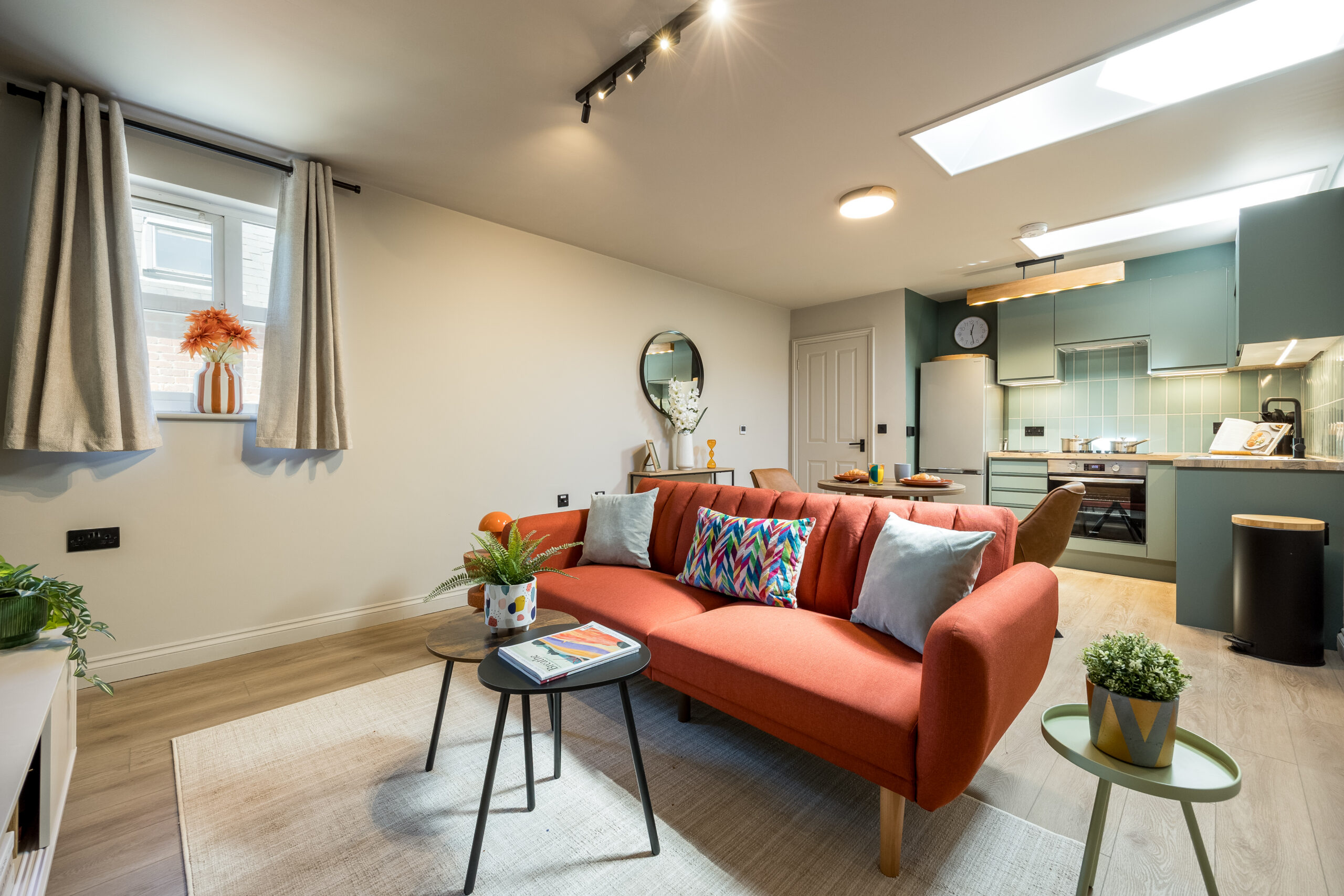
At B-Hive Living, we understand that laundry is a daily need. Our furnished rooms and studios in Oxford and Bicester are designed with your convenience in mind. We offer on-site laundry facilities that are regularly serviced, so you don’t have to worry about the logistics. Our goal is to let you focus on enjoying your new home, not on where to wash your clothes.
How to plan your laundry routine in a new city
Once you’ve secured a place with good laundry access, a little planning can make the chore even easier:
Set a schedule: Choose a regular day or time to do your laundry, so it becomes a habit.
Sort as you go: Use separate hampers for colours, whites, and delicates to save time on laundry day.
Use off-peak hours: If you have shared facilities, try to use them during weekdays or early mornings to avoid queues.
Invest in a drying rack: For delicate items or to save on dryer costs, a foldable drying rack is a space-saver.
Frequently asked questions about laundry in rentals
Can I request a washer/dryer in my unit?
It depends on the property and the landlord. Some rentals, especially furnished ones, may not allow installing your own machines due to space or plumbing constraints. Always ask before you sign the lease.
Is laundry included in the rent at B-Hive Living?
We aim to make your stay as straightforward as possible. Please contact us to confirm the specific details of laundry facilities and any associated costs for the property you’re interested in.
When you’re ready to find a home that takes care of the practical details, apply to live with us or book a viewing to see our laundry facilities for yourself.
When a new hire lands in Oxford or Bicester, the first month often sets the tone for their entire tenure. Between navigating a new role, learning the commute and finding somewhere to live, the transition can be overwhelming. Corporate accommodation, when done well, removes the friction so they can focus on the job from day one. This article compares the practical benefits of booking a serviced flat or room through a provider like B-Hive Living, and helps you plan a smoother relocation for your next starter.
Why corporate accommodation matters for onboarding
Corporate accommodation gives new starters a settled base before they commit to a long-term rental. Instead of juggling viewings and deposit payments during their first weeks, they arrive to a furnished home with bills included and a community around them. That stability reduces stress, which directly supports their ability to learn and contribute early. For employers, it also means fewer distractions and a faster path to productivity.
The hidden costs of leaving new hires to sort their own housing
When a new starter has to find their own place, they often spend evenings and weekends on property portals, and may end up in a temporary Airbnb that’s far from the office or over budget. That costs them time and energy, and it can delay their focus on the job. Corporate accommodation avoids that by providing a ready-to-move-in option, often within a short commute of major employers in Oxford and Bicester.
What to look for in corporate accommodation
Not all corporate housing is equal. The best options combine convenience, comfort and community. Here’s what to check when evaluating a provider:
Furnished and equipped: A bed, desk, kitchen essentials and Wi-Fi should be in place before arrival.
Bills included: Utilities, council tax and internet in one monthly figure avoids surprises.
Flexible terms: Look for stays from a few weeks to several months, with clear renewal options.
Community or support: On-site staff or organised events help new starters build a network quickly.
Location: Proximity to your office or good transport links reduces commute stress.
Comparing B-Hive Living’s offer
B-Hive Living provides furnished rooms, studios and one-bedroom flats in Oxford and Bicester, with a focus on wellness and community. Their properties are designed for young professionals, remote workers and corporate relocations, and they offer flexible stays. While we can’t guarantee availability, their model is built around making the first month feel less like a temporary stop and more like a home.
How corporate accommodation supports the first month at work
The first month is about learning the role, the team and the culture. Corporate accommodation supports that by removing practical worries. A new starter who isn’t anxious about their housing can arrive each day with more energy and focus. They also have a comfortable space to rest and recharge, which matters when they’re absorbing a lot of new information.
Reducing relocation stress
Relocation is one of the top stressors for new employees. Corporate accommodation that’s ready on arrival means no furniture assembly, no utility switchovers and no waiting for broadband. That’s a tangible reduction in admin, and it lets the starter invest their mental bandwidth in the job.
Building a local network faster
Moving to a new city can be isolating. Providers like B-Hive Living organise social events and create shared spaces, which help new starters meet people outside work. That sense of belonging can improve morale and retention, which is a clear benefit for employers.
Practical steps to book corporate accommodation
If you’re an employer or a new starter, here’s how to make the process smooth:
Start early: Begin the search at least two weeks before the start date to secure your preferred property.
Clarify the budget: Know what’s included and what’s extra, such as parking or cleaning services.
Check the terms: Understand the notice period and any deposit requirements.
Ask about corporate rates: Some providers offer discounts for longer stays or multiple bookings.
Book a viewing: If possible, visit the property or request a virtual tour to ensure it meets your needs.
What to prepare before arrival
Once booked, the starter should confirm the check-in time, arrange transport from the station or airport, and pack essentials like toiletries and a change of clothes. Most corporate accommodation provides bedding and kitchen basics, but it’s worth checking.
Frequently asked questions about corporate accommodation
Is corporate accommodation more expensive than a standard rental?
It can be, but it often includes bills, furniture and flexibility, which can save money and hassle in the short term. For a first month, it’s often a cost-effective way to settle in before committing to a longer lease.
Can corporate accommodation be extended if the starter wants to stay longer?
Yes, many providers allow extensions, subject to availability. B-Hive Living, for example, offers flexible terms that can be adjusted as needed.
What if the starter needs to cancel or change dates?
Policies vary, so it’s important to check the cancellation terms before booking. Some providers offer free cancellation up to a certain number of days before arrival.
Choosing the right corporate accommodation can make a real difference to a new starter’s first month. By providing a comfortable, convenient and supportive base, you help them start strong. If you’re planning a relocation to Oxford or Bicester, explore the Hives at B-Hive Living or discuss a corporate stay with our team.
When your team lands a project in Bicester, finding the right accommodation can be the difference between a smooth deployment and a logistical headache. Whether it’s a six-week engineering contract or a three-month retail rollout, you need a place that’s ready to move into, close to work, and flexible enough to match the project timeline. This article compares the best options for corporate stays in Bicester, from serviced apartments to coliving, so you can book with confidence.
Why Bicester for Project-Based Work?
Bicester has grown into a key hub for logistics, automotive, and retail operations, with major employers like Bicester Village, Amazon, and BMW Mini. Its position on the M40 and the Chiltern Mainline means quick access to Oxford, Milton Keynes, and London. For project teams, this means less commuting time and more focus on the job.
Types of Corporate Accommodation in Bicester
Serviced Apartments
Serviced apartments offer a hotel-like experience with more space. You get a fully furnished flat, weekly cleaning, and utilities included. Prices typically start from £120 per night for a one-bedroom unit. They work well for short stays (1-4 weeks) but can get expensive for longer projects.
Coliving Spaces
Coliving, like B-Hive Living, provides private studios or rooms in a shared building with communal areas. It is designed for longer stays (1 month+) and includes all bills, high-speed WiFi, and regular social events. Prices are often 20-30% lower than serviced apartments for the same duration. B-Hive’s Bicester property, for example, offers studios from £850 per month.
Extended Stay Hotels
Hotels like the Bicester Hotel & Spa or Premier Inn offer corporate rates for long stays, but you will pay for meals and laundry separately. A standard room can cost £90-£150 per night, making it less cost-effective for teams of more than two people.
Key Factors to Compare
Location and Transport Links
Bicester Village is a 10-minute walk from Bicester Village station (Chiltern Railways), which runs direct trains to London Marylebone in 46 minutes. The town centre is well-connected by bus to Oxford and Banbury. For projects near the industrial estates on the outskirts, a car is useful.
Lease Flexibility
Project timelines change. Look for accommodation that offers weekly or monthly rolling contracts without early exit fees. B-Hive Living allows stays from 1 month with no long-term commitment.
Bills and Amenities
All-inclusive bills (electricity, water, gas, WiFi, council tax) simplify budgeting. Coliving and serviced apartments usually include these; hotels do not. Check if the property has a dedicated workspace, laundry, and parking.
Cost Comparison for a 3-Month Stay
Serviced apartment (1-bed): £3,600–£5,400 total (£1,200–£1,800/month)
Coliving studio (B-Hive): £2,550 total (£850/month)
Extended stay hotel (single room): £8,100–£13,500 total (£2,700–£4,500/month)
Note: Prices are approximate and subject to availability. Always confirm directly with the provider.
Insider Tips for Corporate Bookings
Book at least 2 weeks ahead for the best rates, especially during peak seasons (summer and Christmas).
Ask about group discounts. Some providers offer 10-15% off for 5+ rooms.
Check if the property can invoice your company directly for easier expense tracking.
Frequently Asked Questions
Can I book for a team of 10+ people?
Yes. B-Hive Living can accommodate groups in multiple studios or rooms within the same building. Contact them directly to discuss availability and rates.
Is parking included?
At B-Hive Bicester, limited on-site parking is available on request. Most serviced apartments offer a dedicated space. Hotels usually charge extra.
What if the project ends early?
Coliving and serviced apartments typically require 1-2 weeks’ notice for early termination. Always read the cancellation policy before booking.
For your next project team in Bicester, consider coliving for its balance of cost, flexibility, and community. Discuss a corporate stay with B-Hive Living to explore options tailored to your project’s needs.
When your company needs to relocate several employees to Oxford or Bicester at once, the usual approach of booking individual rentals one by one quickly turns into a logistics puzzle. You’re juggling different move-in dates, varying budgets, and the pressure to get everyone settled fast. This guide walks you through the practical steps to book multiple homes for your team, comparing the options, costs, and timelines so you can make a confident decision.
Why book multiple homes as a block?
Booking several properties together, rather than separately, simplifies the entire relocation process. You get a single point of contact, consistent quality across homes, and the ability to negotiate terms that fit your company’s needs. For a team moving to Oxford or Bicester, this approach reduces administrative overhead and ensures everyone arrives to a similar standard of accommodation, which helps with team cohesion from day one.
Step 1: Assess your team’s needs
Before you start searching, gather the key details from each relocating employee. This avoids mismatches and wasted time later.
Number of people: Confirm how many employees need housing and whether any have partners or children.
Preferred location: Ask about commute preferences. Oxford city centre is ideal for those working near the university or tech parks, while Bicester offers a quieter, more affordable option with good rail links.
Budget per person: Set a realistic range for each employee, considering their role and seniority.
Move-in dates: Note any flexibility. Staggered arrivals might allow you to book homes sequentially.
Length of stay: Determine if the need is short-term (a few months) or long-term (a year or more). This affects lease terms and pricing.
Step 2: Choose the right type of accommodation
For a team, you have three main options: individual apartments, a shared house, or a coliving space. Each has its trade-offs.
Individual apartments
Each employee gets their own flat or studio. This offers maximum privacy and independence, which suits senior staff or those with families. However, it’s often the most expensive option, and you’ll need to manage multiple leases and landlords.
Shared house
Renting a large house for several employees to share is cost-effective and can build camaraderie. The downside is less privacy and potential personality clashes. It works best for junior teams or those who already know each other.
Coliving spaces
Coliving, like the homes offered by B-Hive Living, provides furnished private bedrooms with shared common areas. It balances privacy with community, and because it’s designed for flexibility, it’s often easier to book multiple rooms at once. You get one contract, one bill, and a built-in support network for your team.
Step 3: Compare costs and what’s included
When comparing options, look beyond the monthly rent. Consider what’s included in the price.
Utilities: Are bills like electricity, water, and internet included? With B-Hive Living, they are, which simplifies budgeting.
Furniture: Is the home fully furnished? This saves your employees the hassle and cost of buying furniture.
Council tax: Who pays it? In shared houses, it’s often split, but in coliving, it’s usually covered.
Deposit: How much is required upfront? Some providers offer flexible deposit options for corporate bookings.
Minimum stay: Are there penalties for leaving early? Flexible terms are valuable for relocations that might change.
Step 4: Plan the logistics
Coordinating multiple move-ins requires a clear plan. Here’s what to think about:
Key handover: Arrange for a single point of contact to collect keys for all properties, or schedule staggered handovers.
Welcome packs: Consider providing basic essentials like toiletries and tea, so employees don’t have to shop on their first night.
Local orientation: Provide a simple guide to the area, including transport links, supermarkets, and gyms.
Wi-Fi setup: Ensure internet is active before arrival, especially for remote workers.
Step 5: Work with a single provider
The easiest way to book multiple homes is to work with a provider that can handle the entire process. B-Hive Living specialises in corporate accommodation in Oxford and Bicester, offering furnished rooms, studios, and one-bedroom flats. We manage everything from booking to ongoing support, so you don’t have to coordinate with multiple landlords.
Our team can help you match each employee to the right home, arrange viewings (virtual or in-person), and handle the paperwork. We also offer flexible lease terms to accommodate your project timeline.
Yes, B-Hive Living can accommodate staggered arrivals. We’ll coordinate the availability of each home to match your team’s schedule.
What if an employee needs to extend their stay?
We offer flexible lease extensions, subject to availability. Just let us know before the current term ends.
Do you offer discounts for multiple bookings?
We provide preferential rates for corporate bookings of three or more homes. Contact us for a tailored quote.
Ready to book your team’s accommodation?
Coordinating a team relocation is complex, but the right accommodation partner makes it simpler. Explore our furnished homes in Oxford and Bicester, or get in touch to discuss your requirements. Discuss a corporate stay with us and we’ll help you find the perfect solution for your team.
If you’re relocating to Oxford or Bicester for a three-month work assignment, the choice between a hotel and a corporate apartment shapes your daily routine, your budget, and your wellbeing. This guide compares the two options across cost, space, comfort, and practicality, helping you decide which suits your stay. You’ll also see how B-Hive Living’s furnished apartments fit into the picture.
Cost Comparison: What You Really Pay
Hotels charge per night, and the total for 90 nights adds up quickly. Corporate apartments typically offer monthly rates that are lower per week, and they often include bills, Wi-Fi, and council tax in the rent. For example, a mid-range hotel in Oxford might cost £120 per night, which is £10,800 for three months. A corporate apartment could be £1,500 per month, totalling £4,500, a significant saving. However, always check what’s included, as some apartments charge extra for utilities or cleaning.
Hidden Costs to Watch For
Hotel: breakfast, parking, laundry, and room service can add £20–£50 per day.
Apartment: some require a deposit, a booking fee, or a minimum stay penalty if you leave early.
At B-Hive Living, our monthly rates are all-inclusive, so you know your budget from day one. We don’t hide fees, and we’re transparent about what’s covered.
Space and Comfort: Room to Live vs Room to Sleep
A hotel room is designed for short stays, with limited storage and often no separate living area. After a week, you’re living out of a suitcase. A corporate apartment gives you a bedroom, a living room, and a kitchen, so you can cook, work, and relax without feeling cramped. For a three-month stay, that extra space matters for your mental health and productivity.
What to Look For
A proper desk and ergonomic chair for remote work.
A fully equipped kitchen with a hob, oven, and fridge-freezer.
En-suite or private bathroom, not shared.
Natural light and ventilation, which boost mood.
Our B-Hive apartments are designed with these features, and we’ve added wellness touches like blackout curtains and quiet zones to help you sleep and focus.
Location and Commute: Getting to Work and Around
Hotels are often in city centres, which is convenient for sightseeing but can mean a longer commute to business parks or offices on the outskirts. Corporate apartments are usually in residential areas, closer to where people actually work. In Oxford, the science parks and hospitals are on the ring road; in Bicester, the business parks are near the M40. Check the travel time to your office, not just the postcode.
Transport Options
Oxford: Park and Ride, bus services, and cycling routes.
Bicester: Train to Oxford or London Marylebone, plus local buses.
Car: Parking availability and costs vary, so ask your employer or landlord.
We at B-Hive Living choose locations with good transport links, and we can tell you the typical commute times to major employers. We won’t guess; we’ll share verified info.
Services and Flexibility: What’s Included and What’s Extra
Hotels offer daily housekeeping, room service, and a front desk, but those services come at a premium. Corporate apartments give you more independence, but you might have to handle your own cleaning or arrange it at an extra cost. For a three-month stay, you may want weekly cleaning, not daily. Check what’s included in your rate.
Apartment: weekly cleaning (sometimes), Wi-Fi, bills, and sometimes a welcome pack.
At B-Hive, we offer flexible cleaning packages, and our community manager is on call for issues, but you’re not paying for services you don’t use.
Wellbeing and Community: Feeling at Home
Living in a hotel for three months can feel isolating. You’re in a transient space with no community. Corporate apartments, especially those with a coliving model like B-Hive, offer common areas, social events, and a chance to connect with other professionals. That social support can reduce stress and make your assignment more enjoyable.
What to Consider
Do you want a private flat or a shared house with private rooms?
Are there communal spaces like a lounge or garden?
Are there organised activities, or is it just a building?
We host monthly dinners and workshops, but we don’t force interaction. You can be as social or private as you like.
Making the Right Choice for Your Stay
If you value cost savings, space, and a sense of home, a corporate apartment is likely your best bet for a three-month assignment. If you need daily housekeeping and a 24/7 front desk, a hotel might be worth the extra expense. Consider your priorities: budget, commute, space, and community. Weigh them against what each option offers.
Quick Comparison Table
AspectHotelCorporate ApartmentCost for 90 nights£10,800+£4,500+SpaceSingle roomSeparate roomsKitchenNoYesCleaningDailyWeekly or selfCommunityLimitedPossibleFlexibilityShort noticeMonthly
For many professionals, the balance tips toward an apartment. If you’re leaning that way, explore the Hives at B-Hive Living to see our furnished options in Oxford and Bicester. You can book a viewing or discuss a corporate stay with our team.
Frequently Asked Questions
Are corporate apartments cheaper than hotels for a three-month stay?
Yes, typically. Monthly rates are lower than nightly rates, and bills are often included, saving you 30–50% compared to a hotel.
Can I get a short-term lease for three months?
Yes, many corporate apartments offer flexible leases from one month up. B-Hive Living offers three-month stays as standard, with no long-term commitment.
What should I look for in a corporate apartment?
Check the location, included services, kitchen facilities, and whether there’s a community aspect. Ask about cleaning, Wi-Fi, and any extra fees.
When you’re settling into a corporate stay for a month or more, the kitchen can make or break the experience. It’s not just about having a kettle and a microwave; it’s about maintaining routines, eating well, and feeling at home. This article will help you compare accommodation options in Oxford and Bicester, focusing on the kitchen facilities that truly matter for longer business stays.
What to Look for in a Kitchen for Extended Stays
For stays longer than a few weeks, a fully equipped kitchen is essential. Look for a hob, oven, fridge-freezer, and essential cookware. A dishwasher is a bonus that saves time. Check if the accommodation provides basic pantry items like salt, pepper, and oil, and whether there’s a washing machine, which is often a deal-breaker for longer trips.
Key Appliances and Utensils
Hob and oven for proper cooking
Fridge-freezer with enough space for weekly shops
Microwave and kettle for quick meals
Pots, pans, knives, and cutting boards
Dishwasher or washing-up supplies
Storage and Counter Space
Ample storage and counter space allow you to cook and prepare meals without clutter. Look for cupboards that aren’t overly full of other people’s items, and a countertop that has room for a chopping board and a coffee machine.
How Kitchen Facilities Affect Your Wellbeing and Routine
Cooking your own meals can significantly improve your wellbeing during a long business trip. It gives you control over your diet, saves money compared to eating out, and provides a comforting routine. A kitchen that’s a pleasure to use can reduce stress and make you feel more settled.
The Financial and Health Benefits
Preparing meals at home is often cheaper than dining out, and it’s easier to maintain a balanced diet. You can cater to dietary restrictions and preferences, which is harder when relying on restaurants. Plus, the simple act of cooking can be a relaxing break from work.
Comparing Kitchen Facilities in Oxford and Bicester
Oxford and Bicester offer different living experiences, and their accommodation options reflect that. In Oxford, you might find more historic buildings with compact kitchens, while Bicester often has newer developments with more modern, open-plan kitchens. Consider what matters most to you: space, modernity, or location.
Oxford: Character and Convenience
Oxford’s accommodation ranges from converted townhouses to purpose-built apartments. Kitchens may be smaller but are often well-equipped. Look for places near local markets for fresh produce, like the Oxford Covered Market, to make the most of your cooking.
Bicester: Modern and Spacious
Bicester, known for its village and designer outlet, has seen a rise in modern apartment complexes. These often feature larger kitchens with high-spec appliances, ideal for those who enjoy cooking. The proximity to Bicester Village also offers quick access to groceries and dining.
How B-Hive Living Enhances Your Stay
At B-Hive Living, we understand that a well-equipped kitchen is crucial for longer stays. Our furnished homes in Oxford and Bicester come with full kitchens, including cookware and essential appliances, so you can settle in and start cooking from day one. We focus on wellness-led living, and that includes supporting your nutritional needs.
Our Kitchen Features
Fully equipped kitchens with modern appliances
Essential cookware and utensils provided
Comfortable dining areas for meals and work
Weekly cleaning options to keep things tidy
Community and Support
Beyond the kitchen, we offer community experiences and support to help you feel connected. Whether it’s a cooking class or a communal dinner, we encourage residents to share meals and stories, making your stay more enjoyable.
Frequently Asked Questions
Do B-Hive Living apartments have dishwashers?
Some of our properties include dishwashers, but not all. Please check the specific listing or contact us to confirm the amenities available in your preferred home.
Can I request additional kitchen equipment?
Yes, we’re happy to accommodate reasonable requests for additional kitchen items, such as a blender or specific cookware, subject to availability.
When you’re arranging accommodation for a new hire or a relocating employee, the pressure to get it right quickly is real. A corporate let can solve housing stress, but signing the wrong agreement creates costs, complaints, and churn. This guide walks you through the specific questions HR teams should ask before committing to a corporate let, covering lease flexibility, bills, furnishing, community, and wellbeing support.
What are the lease terms and exit clauses?
The first thing to clarify is the flexibility of the lease. Corporate lets often run for 6 to 12 months, but your employee’s assignment might be shorter or longer. Ask directly: Can the term be shortened or extended? What notice period is required, and are there penalties for early exit? A good provider will offer terms that adapt to your business needs, not just a fixed contract.
What happens if the employee leaves early?
Find out the process for early termination. Is there a break clause? What costs are involved? Some providers allow you to swap the employee without penalty, which is useful for rotations or replacements. Ensure the agreement is clear on this so you don’t pay for empty rooms.
What is included in the monthly cost?
Hidden costs are the enemy of a smooth corporate relocation. Ask for a full breakdown of what the monthly fee covers. Typically, this includes rent, utilities, Wi-Fi, and council tax, but confirm whether there are any additional charges for parking, cleaning, or maintenance. A transparent provider will give you a single all-inclusive figure with no surprises.
Are bills and Wi-Fi really included?
Double-check that utilities like electricity, water, gas, and high-speed internet are genuinely included and not capped. For remote workers, reliable Wi-Fi is non-negotiable. Ask about the broadband speed and whether there’s a backup if it goes down.
How are the homes furnished and equipped?
Your employee needs to move in and work immediately, not assemble flat-pack furniture. Ask about the level of furnishing: Is it fully furnished with quality pieces? Is there a desk and ergonomic chair for remote work? What about kitchen appliances, bedding, and towels? A wellness-led provider like B-Hive Living ensures homes are move-in ready with comfortable, functional spaces.
Is there a starter pack or welcome kit?
Some providers offer a welcome pack with essentials like tea, coffee, and toiletries, which makes the first night easier. Ask if this is included. It’s a small detail that shows the provider cares about the employee’s experience.
What support and community do residents get?
Relocation is stressful, and a sense of community can make all the difference. Ask what social events or communal spaces are available. Does the provider organize meetups or have a resident app? For employees moving alone, a built-in community helps them settle faster and feel less isolated.
Is there on-site management or a helpdesk?
Find out who handles maintenance requests and how quickly they respond. Is there a 24/7 helpline? Knowing that your employee can get help quickly reduces your administrative burden and their anxiety.
How does the location suit your employee’s commute and lifestyle?
Location is more than just a postcode. Ask about transport links to major employers, shops, and leisure facilities. For example, in Oxford, properties near the train station or park-and-ride are ideal for commuters to London or the science parks. In Bicester, proximity to the town centre and Bicester Village might be a plus. Provide your employee with a clear picture of the commute times and local amenities.
What are the parking options?
If your employee drives, ask about parking availability and cost. Some city-centre properties have limited parking, so it’s crucial to know this upfront to avoid daily parking headaches.
Can you provide references or testimonials?
Don’t just take the provider’s word for it. Ask for references from other HR teams or corporate clients who have used their services. A reputable provider will be happy to share testimonials or case studies. This gives you confidence in their reliability and quality.
What is the booking and move-in process?
Finally, understand the practical steps. How do you book? Is there a simple online portal? How much notice is needed? What happens on the move-in day? A streamlined process means less stress for you and your employee.
Can you arrange a viewing or virtual tour?
Always request a viewing or a virtual tour before signing. This lets you see the property’s condition and verify that it matches the photos. It’s also a chance to meet the team and ask any additional questions in person.
Frequently asked questions about corporate lets
Can we use a corporate let for a short-term internship?
Yes, many providers offer flexible terms that can accommodate short stays, sometimes as short as a few weeks. Always ask about minimum stay requirements and whether the rate is adjusted for shorter periods.
Are corporate lets more expensive than standard rentals?
Corporate lets often include more services and flexibility, which can make them slightly more expensive per month. However, the all-inclusive nature and reduced hassle often make them cost-effective for businesses, especially when you factor in the time saved on setup and management.
Can we book multiple units for a team?
If you’re relocating a group, ask about group bookings. Providers may offer a discount or coordinate units in the same building, which can help with team cohesion. B-Hive Living, for instance, can discuss options for multiple residents.
By asking these questions, you’ll avoid common pitfalls and secure a corporate let that supports your employee’s wellbeing and productivity. If you’re considering Oxford or Bicester, discuss a corporate stay with us to see how we can meet your relocation needs.
Relocating to Oxford or Bicester for work, you face a choice: en-suite room, studio, or one-bed flat for your corporate relocation. Each option changes your budget, commute, and how quickly you feel at home. This guide compares them across cost, space, privacy, and community, so you can match the right setup to your new role and lifestyle.
What’s the real difference between an en-suite, a studio, and a one-bed flat?
An en-suite room gives you a private bedroom and bathroom, with shared kitchen and living spaces. A studio combines bedroom, living area, and often a kitchenette in one open-plan layout. A one-bed flat is fully self-contained with separate rooms and your own front door. The trade-off is simple: more independence usually means a higher price and less built-in social life.
En-suite room: the social and budget-friendly option
If you’re new to the area and want to build a network fast, an en-suite in a coliving building like B-Hive Living is a smart start. You get your own lockable bedroom and bathroom, but share a kitchen, lounge, and sometimes a co-working space. That setup makes it easier to meet neighbours, join group dinners, or find a running buddy, which matters when you don’t know anyone yet.
Studio: the middle ground for focus and flexibility
A studio suits remote workers or couples who want more control over their space without the full responsibility of a flat. You’ll have your own kitchen and living area, so you can cook at midnight or take a video call without worrying about flatmates. The catch is that studios are usually smaller than a one-bed, so you’ll need to be comfortable with an open-plan layout.
One-bed flat: maximum privacy and independence
For those who value total separation between work and home, a one-bed flat is the clearest choice. You get a dedicated bedroom, a separate living room, and a kitchen you don’t share. That privacy is ideal for couples, senior roles, or anyone done with shared living. The trade-off is cost and sometimes a quieter social life, unless you actively seek out community events.
How do costs compare for corporate relocations in Oxford and Bicester?
Rental prices vary by location and season, but the general pattern holds: en-suite rooms are the most affordable, studios sit in the middle, and one-bed flats cost the most. In Oxford, city-centre one-beds can easily exceed £1,500 per month, while a coliving en-suite might start around £900 to £1,100. Bicester tends to be slightly cheaper, though new developments are narrowing the gap. Always check current listings for exact figures.
What’s included in the rent?
At B-Hive Living, our rents are all-inclusive, covering utilities, Wi-Fi, and council tax. That means no surprise bills at the end of the month, a relief when you’re juggling a new job and a move. A private landlord might quote a lower rent, but you’ll often pay extra for electricity, heating, and internet, so compare the total cost, not just the headline number.
How do deposits and lease terms differ?
Corporate relocations often need flexibility, so look for providers that offer short-term leases or reduced deposits. B-Hive Living works with employers to arrange stays from a few weeks to several months, and we don’t ask for a traditional six-month commitment. A one-bed flat usually requires a longer tenancy and a deposit of five to six weeks’ rent, which can tie up your cash.
Which option gives you the best commute and location?
Your daily commute is a major factor. If your office is in Oxford city centre, a room in a coliving building near the station or on a bus route saves time. For Bicester, look for accommodation close to Bicester Village or the mainline station, which has direct trains to London Marylebone in about 45 minutes. Studios and flats are more common in residential areas, so check the transport links before you book.
Oxford: walkable and bike-friendly
Oxford is compact, and many corporate workers cycle or walk to work. A central location means you can skip the car and avoid parking fees. B-Hive Living’s Oxford properties are placed near key employers and transport hubs, so you can get to the Science Park or the city centre without a long slog.
Bicester: fast trains and new developments
Bicester is growing fast, with new homes and offices popping up. The mainline station is a big draw for commuters heading to London or Birmingham. If you choose a flat or studio here, you’ll likely have more space for your money, but you’ll need to factor in the train fare if your office isn’t local.
How does community and wellbeing factor into your choice?
Where you live affects your mental health and how quickly you settle in. An en-suite room in a coliving setting gives you built-in social opportunities, which can reduce the loneliness that often comes with relocation. Studios and flats offer more privacy, but you’ll need to make an effort to meet people, whether that’s joining a local club or attending events at your building.
Wellness-led amenities make a difference
B-Hive Living designs its spaces with wellbeing in mind: think natural light, quiet zones, and communal areas that encourage conversation. We also host regular social events, from yoga mornings to board game nights, so you don’t have to rely on chance to make friends. That’s a benefit you won’t find in a standard flat.
What if you’re a couple or a remote worker?
Couples often prefer a one-bed flat for the extra space and privacy, but a studio can work if you’re both out during the day. Remote workers need a quiet spot for calls, so a studio with a separate desk area might beat an en-suite where you’d have to work in your bedroom. Think about your daily routine before you decide.
How do you choose the right option for your relocation?
Start by listing your must-haves: budget, commute time, privacy level, and social needs. Then match those against the options. If you’re on a tight budget and want to meet people, an en-suite is the safe bet. If you need quiet and don’t mind paying more, a one-bed flat is worth it. A studio is the compromise for many.
Quick comparison table
En-suite: lowest cost, shared kitchen/lounge, high social potential, less privacy.
Studio: mid cost, own kitchen/living, moderate privacy, limited social space.
One-bed flat: highest cost, full independence, maximum privacy, no built-in community.
What about corporate stays and flexibility?
If your employer is arranging the move, ask if they have a corporate housing partner. B-Hive Living offers corporate accommodation with flexible terms, so you can extend or shorten your stay without penalty. That flexibility is a lifesaver if your project timeline changes.
Frequently asked questions about corporate relocation housing
Can I book a short-term stay before committing to a longer lease?
Yes, many providers, including B-Hive Living, offer short-term stays from a few weeks. That’s a great way to test the area and the accommodation before you sign a longer contract.
Are bills really included in the rent?
At B-Hive Living, yes, all bills are included: utilities, Wi-Fi, and council tax. Always confirm with other landlords, as some charge extra.
What if I need to move in quickly?
Corporate relocations often happen fast. Look for providers that can move you in within a few days of your arrival. B-Hive Living aims to have rooms ready for immediate occupancy, subject to availability.
Now that you know the trade-offs, you can make a confident choice. If you’re leaning toward a community-focused en-suite or a flexible studio, Apply to live with us or Book a viewing to see what’s available. For employer-led moves, Discuss a corporate stay with our team.
When you’re arranging a stay for a relocating employee or a project team, the choice between corporate accommodation and Airbnb can feel like a coin toss. But the differences in risk, cost, and consistency are significant. This article helps you compare the two options, so you can make a decision that protects your people and your budget.
What is corporate accommodation and how does it differ from Airbnb?
Corporate accommodation is a fully furnished home or apartment leased directly from a provider, typically for a month or longer. Unlike Airbnb, which is a peer-to-peer platform for short-term rentals, corporate accommodation is managed by a professional company that specialises in business stays. This means you get a dedicated point of contact, consistent quality standards, and services like housekeeping and maintenance built into the agreement.
For example, at B-Hive Living, we offer corporate stays in Oxford and Bicester, with all bills, Wi-Fi, and weekly cleaning included. Our properties are designed for longer stays, with workspaces and community areas, so your team can settle in and focus on work.
Cost comparison: which is more cost-effective for longer stays?
For stays of a month or more, corporate accommodation is often more cost-effective than Airbnb. Airbnb listings typically add a service fee and cleaning fee to the nightly rate, and longer stays may not always get a discount. Corporate accommodation, on the other hand, offers a single weekly or monthly rate that includes all bills and services, so you avoid unexpected costs.
Consider a 30-day stay in Oxford. An Airbnb might cost £100 per night, plus a £50 cleaning fee and a £60 service fee, totalling £3,110. A corporate apartment might be £1,800 per month, all inclusive, saving you over £1,300. The savings come from the provider’s ability to offer a longer-term rate and bundle services.
Risk management: how do the two options differ in reliability and support?
Airbnb stays come with higher risk: the property might not match the photos, the host could cancel at short notice, and you have little recourse if something goes wrong. Corporate accommodation providers are accountable for the quality and upkeep of their properties. They have professional teams to handle issues, and contracts that guarantee the level of service.
For example, if a boiler breaks, an Airbnb host might take days to fix it. A corporate provider will have a maintenance team on call, and they’ll often move you to another property if the issue can’t be resolved quickly. This reliability is crucial for employees who need a stable base to work from.
Consistency and quality: what can you expect from each?
Corporate accommodation is designed for consistency. Each property is professionally furnished and maintained to a standard, with the same amenities and support across the portfolio. Airbnb properties vary widely in quality, and you can’t be sure what you’ll get until you arrive.
At B-Hive Living, we apply the same standards to every property: comfortable beds, fast Wi-Fi, a fully equipped kitchen, and a clean, modern space. We also offer community areas and events, which can help your employees feel connected, especially if they’re new to the area.
Which is better for your business? Key considerations
When deciding between corporate accommodation and Airbnb, think about the length of stay, the number of people, and the level of support you need. For short, flexible stays, Airbnb might be fine. But for longer assignments, relocations, or project teams, corporate accommodation offers better value, lower risk, and a more consistent experience.
Also consider the wellbeing of your employees. A corporate provider like B-Hive Living focuses on wellness-led living, with spaces that support a healthy work-life balance. This can make a big difference to productivity and satisfaction.
Frequently asked questions about corporate accommodation vs Airbnb
Can I get a discount for a long-term stay on Airbnb?
Some Airbnb hosts offer weekly or monthly discounts, but they are not guaranteed and vary widely. Corporate accommodation providers typically have set rates for longer stays, which are often lower than the nightly rate, and include all bills.
What happens if there’s a problem with the property?
With Airbnb, you’d need to contact the host and hope they respond quickly. With corporate accommodation, you have a professional management team that will resolve issues promptly, often with a guaranteed response time.
Is corporate accommodation more expensive than Airbnb?
For stays of a month or more, corporate accommodation is usually more cost-effective because the rate includes all bills and services. For very short stays, Airbnb might be cheaper, but you sacrifice reliability and support.
If you’re planning a corporate stay in Oxford or Bicester, consider the benefits of a dedicated provider. Discuss a corporate stay with us to see how we can support your team.
Booking corporate accommodation for construction and infrastructure teams across the Oxford to Bicester corridor comes down to three practical tests: how fast a crew reaches the site gate, how cleanly the invoices clear your finance team, and whether people actually sleep between shifts. This guide helps project managers, HR and relocation coordinators compare furnished rooms, studios and one-bedroom flats against hotels and serviced apartments, plan a booking timeline before mobilisation, and ask the right questions on billing and lease terms.
B-Hive Living provides furnished homes in Oxford and Bicester for corporate stays, built around a wellness-led coliving model for people living away from home for weeks or months.
What counts as corporate accommodation for construction and infrastructure teams
Corporate accommodation is housing booked and usually invoiced to a company rather than an individual, for a defined project period. On construction and infrastructure work that normally means furnished, ready-to-move-in homes, a single point of contact, and billing your finance team can process without chasing receipts.
Serviced apartment versus furnished room versus hotel
Each format fits a different stage of a project. A hotel covers short scoping visits. Furnished rooms and studios cover longer rotations where someone needs a base, a kitchen and a routine. Serviced apartments suit managers or small teams who need more space and privacy.
Hotel: usually no cooking facilities, higher nightly rates over long stays, minimal storage.
Furnished room in a shared home: lower cost per person, communal kitchen and living space, company on site.
Studio or one-bedroom flat: self-contained, better for couples relocating or managers who need quiet.
Why the Oxford to Bicester corridor works for split teams
Oxford and Bicester sit on the same rail corridor, so you can house a team across both towns and still reach a single site. Oxford suits people working in the city, the hospitals and the science and research clusters. Bicester suits teams working the north-east side of the county and anyone who wants easier road access.
Planning a booking timeline for a new project
Start the accommodation conversation as early as site mobilisation allows. The further ahead you book, the more choice you have over room types and the easier it is to keep a team in one building instead of scattered across three.
Confirm headcount and rotation pattern. How many people, arriving when, staying how long, rotating on what cycle.
Map the site entrance, not the town centre. Travel time to a site gate can differ sharply from travel time to a postcode centre.
Decide who signs. Company account, individual booking or a mix. This affects invoicing and who carries responsibility for damage or early departure.
Agree the billing cycle. Monthly invoicing with a clear reference number saves admin time on both sides.
Book a viewing or virtual walkthrough before committing a large group.
If you are coordinating a corporate stay, you can discuss a corporate stay with the B-Hive Living team and share your headcount and dates directly.
Costs, bills and lease terms to check before you commit
Ask for a written breakdown of what is included and what is not. The headline rent is rarely the full picture, and unexpected extras are the most common source of friction between a housing provider and a project finance team.
Questions to put in writing
Which bills are included in the price, and which are billed separately?
Is there a minimum stay, and what notice is required to extend or end a booking?
What happens if a project overruns or finishes early?
Is parking available, and is it charged?
What is the deposit, and when is it returned?
Who is the day-to-day contact if something breaks?
Comparing quotes fairly
Put every option into the same table before deciding. Compare total cost per person per week, not nightly rate, once bills and any parking charges are added. A slightly higher weekly figure that includes everything is often easier to manage than a cheaper base rate with four separate invoices.
Wellbeing and shift patterns: the part that affects safety
Rest quality is a safety issue on construction and infrastructure projects, not a nice-to-have. Long shifts, early starts and shared living can quietly erode sleep if the accommodation is noisy, overcrowded or poorly laid out.
Check whether rooms have proper blackout curtains and whether the building is quiet at night.
Ask how shift workers are grouped, so day and night crews are not sharing thin walls.
Look for a real kitchen, not just a microwave, so people can eat properly.
Check whether there is shared space to decompress, which matters more on longer rotations.
B-Hive Living designs its homes around this idea: furnished, well-planned spaces with community areas, so residents have somewhere to rest and somewhere to connect without being on top of each other. You can explore the Hives to see how the spaces are set up.
Housing teams across Oxford and Bicester
If your project spans both towns, treat them as one housing pool rather than two separate searches. That gives you more flexibility when a group arrives at short notice or when one building fills up.
When Oxford works better
Choose Oxford for teams working in the city, at the hospitals or in the research and science parks, and for anyone who would rather not drive to work. Rail and bus links within the city are strong, so a base slightly outside the centre can still be practical.
When Bicester works better
Choose Bicester for projects on the north-east side of the county, for teams arriving by car, and for anyone who wants a quieter base with easy access to the M40 and the wider road network. Bicester also tends to suit people who want more space for their money.
For employers, HR and relocation coordinators
A single accommodation partner reduces the admin load on a project team. Instead of managing dozens of individual bookings, you deal with one account, one invoicing cycle and one contact when something needs fixing.
Nominate one person internally to own the accommodation list and keep it current.
Give new starters a short welcome note with the address, travel options and who to contact.
Review the arrangement at the midpoint of the project, not just at the end.
Employers and relocation teams can partner with us to set up a repeatable process for incoming staff and contractors.
For landlords and institutional partners
Corporate demand from construction and infrastructure projects is steady and often longer-term than standard lets, which can reduce void periods and turnover. The trade-off is that corporate tenants expect a professional standard of furnishing and a fast response when something goes wrong.
If you own property in Oxford or Bicester and want to discuss how it could work as corporate accommodation, you can partner with us and we can talk through the options.
Frequently asked questions
How long can a corporate stay run?
Lengths vary by project, from a few weeks to several months. Ask about minimum stay and notice periods before you book, because these terms differ between providers and are the main thing to confirm in writing.
Can a company book several rooms at once?
Yes, group bookings are common for construction and infrastructure teams. Share your headcount, dates and preferred town as early as possible so room types can be matched to your group.
Are bills included?
It depends on the property and the agreement. Always ask for a written list of what is included and what is billed separately, so your finance team knows what to expect.
Do you accommodate remote workers as well as site teams?
Yes. Furnished rooms, studios and one-bedroom flats suit remote workers, couples and professionals on longer placements, not only construction crews.